Operational Landscape
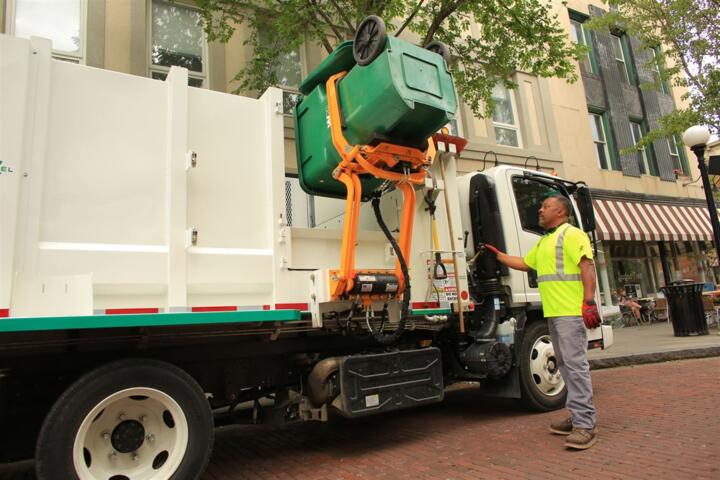
Managing household or commercial waste isn't just about discarding items; it's a logistical equation involving volume, weight, and distance. Private trash pickup offers a fixed-rate convenience where companies like Waste Management (WM) or Republic Services handle the heavy lifting on a scheduled basis. This model provides budget predictability, which is crucial for urban residents with limited storage space.
Conversely, self-hauling involves a "pay-as-you-throw" approach. You load your vehicle, drive to a Transfer Station or Municipal Solid Waste (MSW) landfill, and pay based on tonnage. In rural areas, this is often the only choice, but even in cities, it’s used for large cleanouts where a standard bin won't suffice.
According to recent industry data from the Environmental Research & Education Foundation (EREF), the average municipal solid waste tipping fee in the United States reached approximately $54 per ton in 2023. However, in regions like the Northeast, these prices can exceed $100 per ton, drastically shifting the cost-benefit analysis for those considering self-hauling.
Common Friction Points
Many individuals underestimate the "soft costs" of self-hauling, focusing only on the gate fee at the dump. They often neglect the depreciation of their personal vehicle when hauling heavy, sharp, or leaking materials. A standard SUV or pickup truck isn't designed for liquid seepage from organic waste, which can lead to permanent odors and structural rust.
Misclassification of materials is another critical failure. Dropping off "restricted items" like lithium-ion batteries, old paint, or tires in a standard self-haul load can result in hefty environmental fines or being turned away at the scale. This leads to wasted fuel and hours of lost productivity.
Safety is a frequently ignored consequence. Professional drivers undergo rigorous training, whereas a DIY hauler might improperly secure a load. This doesn't just risk a $200+ ticket for "unsecured load" violations; it creates life-threatening hazards on highways and increases insurance liability if an accident occurs.
Strategic Optimization
Leveraging Local Transfer Stations
For those choosing self-haul, proximity is everything. Using tools like the "Earth911" database allows you to find specialized facilities that might charge less for clean wood or metal versus mixed MSW. Efficient hauling works when you consolidate trips to once a month, reducing the carbon footprint and fuel consumption associated with the task.
Maximizing Curbside Subscriptions
If you opt for private services, don't just pay the bill—audit it. Companies like Casella Waste Systems often offer "overflow" tags or seasonal leaf pickup included in specific tiers. By understanding your provider's specific weight limits (usually 200 lbs for a 96-gallon bin), you avoid "overage" fees that can quietly inflate a $40 monthly bill to $70.
Utilizing Technology for Audits
Apps like "TrashWarrior" or "Rubicon" help businesses and individuals track their waste output. By quantifying how many bags you actually produce, you might find that you can downgrade to a smaller bin or a bi-weekly schedule. Reducing the frequency of private pickup is often the fastest way to save 30% on annual waste costs without lifting a finger.
Implementing Source Separation
Waste costs are driven by weight. By diverting heavy organic matter to a backyard compost bin or a local community garden, you significantly lighten your trash load. Since many transfer stations charge a minimum fee for the first 500 lbs, self-haulers save money by only visiting when they have a dense, dry load that justifies the gate price.
Navigating Bulk Item Logistics
Large furniture or appliances shouldn't go to the landfill. Services like "LoadUp" or "1-800-GOT-JUNK" provide on-demand removal that, while pricier than a dump fee, eliminates the need for truck rentals. In many jurisdictions, private curbside collectors offer two "bulk picks" per year for free—missing these dates is a common financial oversight.
Real-World Scenarios
A small landscaping firm in Austin, Texas, was spending $450 a month on private dumpster rentals. By switching to a self-haul model using an existing trailer and visiting a local recycling center that accepted "green waste" at a 40% discount compared to the landfill, they reduced monthly expenses to $180, including fuel and labor.
In contrast, a suburban homeowner in Seattle attempted to save $50 a month by canceling their curbside service. Between the $25 minimum tip fee at the station and the 90-minute round trip through traffic, they calculated their "hourly savings" at less than $4. After six months, they returned to Republic Services, citing the value of reclaimed weekend time.
Decision Framework
| Factor | Private Collection | Self-Haul Method |
|---|---|---|
| Monthly Cost | $30 – $100 (Fixed) | $20 – $60 (Variable) |
| Time Investment | 5 mins/week | 2–4 hours/trip |
| Vehicle Wear | None | High (Suspension/Interior) |
| Flexibility | Rigid Schedule | On-demand |
| Ideal For | Busy households | Renovators/Rural areas |
Preventing Costly Errors
The most expensive mistake is the "minimum weight" trap. Most landfills charge a minimum fee (e.g., $25) even if you only bring one bag of trash. If you are self-hauling, never go with a half-empty vehicle. Coordinate with neighbors to split the cost of a full load to maximize the value of the trip.
Avoid mixing hazardous waste with general debris. Putting a single car battery in a self-haul load can lead to a "contamination fee" at the scale house that exceeds the cost of a full year of private pickup. Always check the facility's "Accepted Materials" list online before leaving your driveway.
FAQ
Is self-hauling cheaper than a dumpster?
Only if you already own a fuel-efficient truck and live within 10 miles of a facility. When you factor in the IRS mileage rate (67 cents per mile), long trips quickly erase any savings from avoiding a $40 monthly service fee.
Do private companies pick up electronics?
Usually, no. E-waste requires specialized handling due to heavy metals. Most private collectors will leave these items on the curb. You are better off taking these to a Best Buy recycling kiosk or a dedicated municipal e-waste event.
What is a tipping fee exactly?
It is the price per ton charged by a landfill or transfer station to "tip" your waste out of your vehicle. This fee covers the operational costs of the facility, environmental monitoring, and long-term land maintenance.
Can I share a bin with my neighbor?
While it saves money, many private contracts explicitly forbid "commingling" waste from different households. Check your service agreement to avoid account suspension or "over-capacity" fines if the lid won't close.
How do I dispose of renovation debris?
Standard curbside pickup rarely accepts "C&D" (Construction and Demolition) waste like drywall or concrete. For these projects, self-hauling to a specific C&D recycler is significantly cheaper than putting it in a standard garbage bin.
Author’s Insight
In my fifteen years of analyzing municipal logistics, I’ve found that people almost always undervalue their own time. While the "sticker price" of a dump fee looks attractive, the hidden costs of fuel, cleaning your vehicle, and the physical strain of unloading are substantial. My advice: use private pickup for your daily needs, but keep a local "transfer station pass" for those quarterly garage cleanouts. This hybrid approach offers the best balance of fiscal discipline and operational sanity.
Summary
Choosing between private trash pickup and self-hauling requires an honest assessment of your vehicle capabilities, proximity to disposal sites, and the value of your time. For consistent, low-volume waste, a professional subscription is nearly always the more economical and safer choice. However, for large-scale projects or rural living, mastering the logistics of the self-haul can save hundreds of dollars annually. To take action, calculate your total round-trip costs today and compare them against a local $40–$50 monthly service quote to find your personal break-even point.