Equipment Longevity
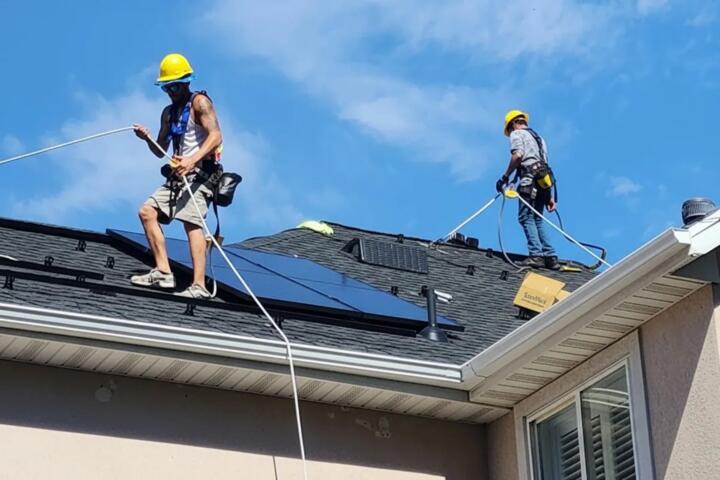
Off-grid systems are composed of three distinct "tiers" of equipment with varying lifespans. Solar panels are the endurance runners, often warrantied for 25 years with a degradation rate of about 0.5% per year. Inverters and charge controllers, such as those from Victron Energy or Midnight Solar, typically last 10 to 15 years. Batteries, however, are the "consumable" heart of the system.
Real-world data suggests that most off-grid failures occur at the storage level. A 2023 industry study found that 70% of off-grid system "downtime" was attributed to premature battery failure caused by improper charging parameters or temperature fluctuations. If you have a $10,000 system, approximately $4,000 to $6,000 of that value resides in the batteries—assets that are actively losing value every time the sun goes down.
Replacement Planning
The most common failure among off-grid owners is the "Replacement Shock." Because batteries degrade slowly over years, the loss in capacity is often invisible until a week of cloudy weather occurs. Suddenly, a bank that used to last three days only lasts one, and the owner is hit with a $5,000 bill they didn't budget for.
Furthermore, many users fail to account for "Technology Mismatch." If you wait ten years to replace your batteries, the communication protocols of your old inverter may not be compatible with the new BMS (Battery Management System) of modern lithium stacks. This forces a "cascade replacement" where the owner must buy new chargers and inverters alongside the batteries, doubling the expected maintenance cost.
Maintenance Strategies
Calculating the Cost Per Cycle
To plan effectively, stop looking at the sticker price and start calculating the cost per kilowatt-hour (kWh) delivered. Divide the total battery cost by the expected cycle life. For example, a EG4 WallMount battery costing $3,500 with 6,000 cycles delivers power at a much lower amortized rate than a $200 12V Lead-Acid battery that dies after 300 deep cycles.
Implementing a Sinking Fund
Financial experts suggest treating your off-grid system like a business. If your battery bank costs $5,000 and is expected to last 10 years, you must set aside $42 per month into a dedicated "Sinking Fund." Using a high-yield savings account like Ally Bank or Wealthfront allows you to earn interest on your replacement fund, effectively letting the bank pay for a portion of your future hardware.
Environmental Optimization for Longevity
Heat is the silent killer of battery chemistry. For every 10°C (18°F) rise above the ideal operating temperature of 25°C, the life of a lead-acid battery is halved. By investing $500 in a climate-controlled battery box or a specialized Mini-Split cooling system, you can extend the life of a $5,000 battery bank by three to four years, yielding a massive return on investment.
Monitoring via Shunts and Smart BMS
Precision monitoring is the only way to track actual depreciation. Devices like the Victron BMV-712 Smart Shunt provide real-time State of Health (SoH) metrics. By tracking the "Amp-hours consumed" over the life of the bank, you can predict the exact month of failure with high accuracy, allowing you to time your purchase during seasonal sales (like Black Friday) rather than buying in an emergency at full price.
Leveraging Tiered Replacement
If your system is modular—such as the Pylontech or Signature Solar server rack batteries—you can replace or add modules incrementally. This "rolling replacement" strategy prevents the massive one-time financial hit. However, this requires a modern inverter capable of "Open Loop" or "Closed Loop" communication with varying battery ages, which should be verified during the initial design phase.
Case Examples
Case Study 1: The "Emergency Swap" (Neglect)
A cabin owner in Colorado used a $3,000 lead-acid bank for five years without monitoring. The bank failed during a mid-winter storm. Because of the emergency, they had to pay $400 in expedited shipping and $1,200 for a local technician to perform an emergency install. Total cost: $4,600 for a 5-year cycle, with significant stress and system downtime.
Case Study 2: The "Amortized Strategy" (Planned)
A full-time off-gridder used LiFePO4 batteries and tracked cycles via a smart shunt. They noticed a 15% capacity drop after 7 years. Because they had a sinking fund, they waited for a manufacturer promotion and bought a higher-capacity 10kWh bank for $3,000. They performed the swap themselves during a scheduled maintenance window. Total cost: $3,000 over 8 years, with zero downtime.
Storage Comparison
| Battery Type | Cost (per 5kWh) | Typical Life | Depreciation & Cost |
|---|---|---|---|
| Flooded Lead Acid | $800 - $1,200 | 3-5 Years | High speed. ~$325/yr |
| AGM (Sealed) | $1,500 - $2,000 | 4-6 Years | Moderate. ~$425/yr |
| LiFePO4 (Lithium) | $1,500 - $3,500 | 10-15 Years | Very Low. ~$200/yr |
| Sodium Ion | $1,200 - $1,800 | 7-10 Years | Moderate. ~$215/yr |
Common Pitfalls
One major error is "Mixing Old and New Cells." When one battery in a 48V string dies, owners are tempted to replace just that one. This is a mistake; the older, weaker batteries will "drag down" the new one, causing it to work harder and degrade much faster. Always replace the entire bank or use a DC-to-DC converter system to isolate different generations of tech.
Another pitfall is ignoring the "End-of-Life Value." Many off-grid owners throw away old lead-acid batteries, unaware that they have a significant core value at recycling centers. For lithium, "Second Life" applications (using 70% health batteries for low-demand tasks like garden lighting) can recoup some of the original investment or provide value elsewhere on the property.
FAQ
How do I know if my batteries are actually dying?
The clearest sign is a rapid voltage drop under load. If your lights flicker or your inverter shuts down when a pump kicks on, despite the meter saying 100%, the internal resistance of the battery has likely increased beyond its useful limit.
Can I switch from Lead-Acid to Lithium without changing my inverter?
Usually, yes, but you must ensure your inverter/charger has a "Lithium" or "User Defined" profile. Lithium batteries require a constant current/constant voltage (CC/CV) charge curve and generally do not like "Equalization" charges used for lead-acid.
Is it better to buy a large bank now or add more later?
For Lithium, adding later is easy. For Lead-Acid, you must buy the whole bank at once. However, even with Lithium, it is best to add new modules within the first 2-3 years of the original install to ensure balanced internal resistance.
Does the 30% Solar Tax Credit apply to replacement batteries?
In the United States, under the Inflation Reduction Act, stand-alone battery storage (over 3kWh) is eligible for a 30% tax credit, even if you are just replacing old batteries in an existing system. Consult a tax professional for current specifics.
How does cold weather affect my depreciation schedule?
Cold doesn't "kill" lithium batteries, but you cannot charge them below freezing (0°C/32°F) without internal heaters. Doing so causes "lithium plating," which can destroy a $2,000 battery in a single afternoon.
Author’s Insight
I have seen more off-grid dreams fail due to battery maintenance than any other factor. My personal rule of thumb is the "Double-and-Half" rule: always buy double the capacity you think you need, and you'll likely get two-and-a-half times the lifespan. Deep cycles are the enemy of longevity. If you only discharge your lithium bank to 50% instead of 80%, you aren't just saving power; you are effectively buying yourself an extra five years of system life for free. Treat your batteries like a living organism—keep them cool, keep them fed, and don't stress them to their limits.
Summary
The depreciation of off-grid equipment is an inevitable physical reality, but it doesn't have to be a financial disaster. By calculating your cost-per-cycle, establishing a monthly sinking fund, and choosing high-longevity chemistries like LiFePO4, you can transform an unpredictable expense into a manageable utility cost. Start by auditing your current cycle counts and setting up a dedicated savings bucket today; the best time to plan for a battery failure is the day you install the first one.