The Off-Grid Reality
Traditional real estate relies on the "walk score"—proximity to Starbucks, transit, and fiber-optic hubs. In off-grid investing, these are liabilities. A property’s value is instead determined by its "energy density" and "resource security." If a traditional home is a terminal connected to a central server, an off-grid property is the server itself. It must generate, process, and store everything it consumes.
For example, a south-facing slope in Idaho with a year-round spring is objectively more valuable than a flat parcel in a posh Arizona suburb with dwindling groundwater. In 2023, properties with "independent water rights" in the American West saw a 14% higher price premium compared to those relying on shared wells or municipal hauling services. Value is no longer about the view; it is about the kilowatt-hours per square meter and the gallons per minute.
Assessing Solar Irradiance
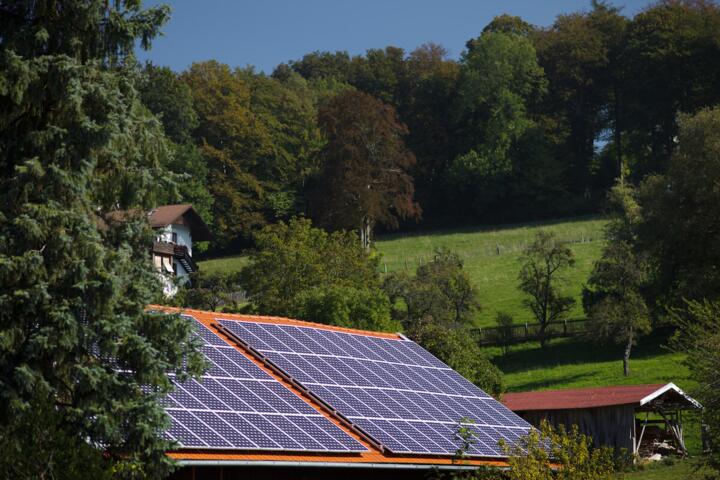
In the off-grid world, your roof is your power plant. Using tools like the Global Solar Atlas or PVWatts, investors must calculate the specific yield of a location. A site with a high "horizon shading" profile—meaning mountains or trees block the sun early—can increase battery storage costs by 40% to compensate for shorter charging windows.
Hydrology as Primary Equity
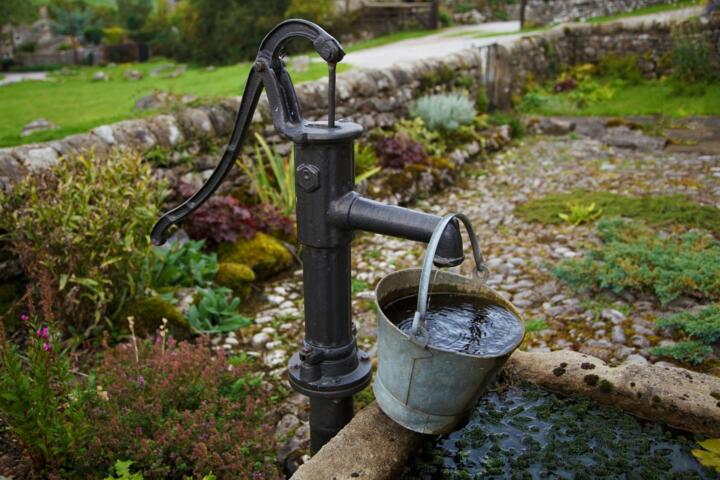
Water is the only non-negotiable. While a solar array can be expanded, an aquifer cannot be easily recharged. Expert investors prioritize parcels with "Senior Water Rights." In states like Colorado, having a permit is not enough; the date of the permit determines who gets water during a drought. A "Junior" right holder might be cut off entirely while the "Senior" neighbor remains lush.
Micro-Climates and Hardiness
A difference of 500 feet in elevation can change your USDA Plant Hardiness Zone. This impacts everything from the cost of heating (R-value requirements) to the ability to grow supplemental food. A property in a "thermal belt"—mid-slope where cold air doesn't settle—can have a growing season 30 days longer than the valley floor below.
Legal and Zoning Sovereignty
The biggest threat to off-grid ROI is "restrictive covenants" or HOA rules. Many rural subdivisions still require a minimum square footage or forbid "alternative" power systems. Savory investors look for "Unincorporated" land or counties with "Opt-out" building codes, such as those found in parts of Missouri or New Mexico, where Earthships and tiny homes are legally permissible.
Connectivity in Isolation
Isolation is a luxury, but lack of data is a financial risk. The advent of Starlink has fundamentally changed off-grid valuations. Properties previously deemed "unworkable" due to lack of DSL or cellular signal have seen a 20% valuation bump because they now support remote high-frequency trading or executive work, provided they have a clear 110-degree view of the northern sky.
Critical Blind Spots
The most common mistake is the "Aesthetic Trap." Investors buy for the sunset but ignore the "Invasive Species" or "Soil Percolation" rates. If the ground is heavy clay, a septic system that costs $8,000 in the city might cost $45,000 for an engineered "mound system" in the wild. This immediately eats the initial "cheap land" savings.
Another failure point is ignoring "Access Maintenance." A 2-mile private dirt road looks romantic in July but becomes a $500-per-plow-trip liability in January. Without a heavy-duty tractor (like a John Deere 4044M) and the skill to use it, you are effectively a prisoner on your own land. Investors often fail to budget for the "Total Cost of Ownership" (TCO) of the infrastructure required to simply reach the front door.
The consequences of these oversights are "Stranded Assets." We see this frequently in the high desert: beautiful cabins abandoned because the cost of hauling water rose from $0.05 to $0.25 per gallon. When the cost of basic survival exceeds the local median income, the property becomes unsellable to anyone but the most niche, speculative buyer.
Proven Frameworks
To maximize ROI, you must invert the search criteria. Start with the "Bottom of the Pyramid"—water and energy—before looking at the house. Use the USDA Web Soil Survey to check for "Prime Farmland" designations. This isn't just for farming; high-quality soil indicates good drainage and stable foundations for outbuildings.
On the energy front, diversify beyond solar. A "High-Head" micro-hydro potential (a stream with a significant vertical drop) is the "Holy Grail." A small turbine from Energy Systems & Design can produce 24/7 power, unlike solar which dies at night. A property with 500 watts of continuous hydro is worth more than a property with 5,000 watts of intermittent solar because it reduces battery bank replacement cycles—a $15,000 saving every 10 years.
Regarding security and privacy, look for "Topographical Shielding." This means the build site is not visible from the main road. In an off-grid context, privacy is a security feature. Using CalTopo, you can map "Viewsheds" to ensure your home remains invisible to passersby, increasing the "Prepper Premium" if you ever decide to flip the asset to the survivalist market.
Investment Outcomes
Case Study 1: The High-Desert Pivot
An investment group purchased 40 acres in San Luis Valley, Colorado, for $35,000. The land was flat and scrub-heavy. Instead of a traditional build, they invested $60,000 in a deep-rock well and a 10kW solar tracker system from AllSun. By "improving" the utility capacity rather than the structure, they sold the parcel 18 months later for $145,000 to a remote tech worker. The ROI was driven entirely by the "Plug-and-Play" nature of the utilities.
Case Study 2: The Appalachian Micro-Hydro
A private buyer bought 15 acres in North Carolina with a steep creek. Total cost: $85,000. They installed a Powerspout hydro turbine for $12,000. While neighbors were spending $400/month on propane for generators during winter storms, this owner had a surplus of electricity, which they used to heat a greenhouse. The property was recently appraised at $210,000, specifically citing "Energy Autonomy" as a key value driver in the appraisal report.
Selection Checklist
| Feature | Minimum Requirement | The "Value Add" Bonus |
|---|---|---|
| Solar Access | 6 hours of peak sun | Southern slope (15-degree grade) |
| Water | 1 Gallon Per Minute (well) | Year-round surface spring + Water Rights |
| Soil | Class 3 or 4 (grazing) | Class 1 or 2 (prime silty loam) |
| Access | 4WD seasonal road | Deeded easement with gravel base |
| Zoning | Residential / Ag | Unzoned / No building permits required |
Avoiding Pitfalls
Don't buy land based on a "Summer Visit." You must see the property during its worst season—usually "Mud Season" in the spring or the height of the dry season in autumn. This reveals the true limits of the driveway and the actual flow rate of the "year-round" creek. Many "creeks" on Zillow are actually ephemeral washes that disappear when you need them most.
Beware of "Easement by Estoppel." Just because a trail exists doesn't mean you have the legal right to use it. Always demand a "Title Commitment" that specifically lists "Inherent Access." Without it, your investment can be held hostage by a neighbor who decides to lock a gate across the only road to your property.
FAQ
Is off-grid land a good hedge against inflation?
Yes, because the primary costs—energy and water—are "pre-paid" at the time of infrastructure installation. While utility rates in cities like San Diego or New York climb 5-10% annually, an off-grid owner’s "utility bill" remains $0, effectively increasing their disposable income over time.
How do I handle waste without a sewer?
Most off-grid properties use septic tanks, but for high-ROI setups, consider Laveo dry-flush or Separett composting toilets. These can reduce the "Hydraulic Load" on your leach field, extending the life of your septic system by decades.
What is the most undervalued off-grid region?
Currently, the "Ozark Plateau" (Missouri/Arkansas) and parts of the "Appalachian Foothills." These areas have high annual rainfall, low taxes, and lenient building codes compared to the overpriced Western US markets.
Do banks finance off-grid properties?
Standard lenders like Wells Fargo rarely touch them. You will likely need a "Land Loan" from a local Farm Credit bureau or "Owner Financing." Expect to put down 20-30% in cash.
Can I really work a 9-5 off-grid?
With a Starlink High-Performance dish and a robust Victron Energy power system, yes. Reliability now rivals urban fiber, provided you have enough battery "Autonomy Days" (usually 3-5) to weather a week of clouds.
Author’s Insight
In my fifteen years of evaluating remote acreage, I’ve found that the most successful investors treat their land like a "Machine for Living." I always tell clients: stop looking at the kitchen cabinets and start looking at the "Static Water Level" of the well. The most profitable move I ever made was walking away from a "beautiful" mountain peak because the drilling logs showed a 1,000-foot dry hole next door. In the off-grid world, a boring, flat piece of land with a 20 GPM well is a gold mine; a picturesque cliff with no water is just an expensive view.
Summary
Smart off-grid investing requires a total reversal of the traditional real estate mindset. By prioritizing geological assets—water rights, solar irradiance, and soil quality—over aesthetic or "proximity" markers, you build an asset that is truly resilient. Focus on the infrastructure TCO, secure your legal access, and remember that in the next decade, the most valuable "location" will be the one that functions perfectly when the rest of the world is disconnected. Start your search by mapping the water, not the roads.