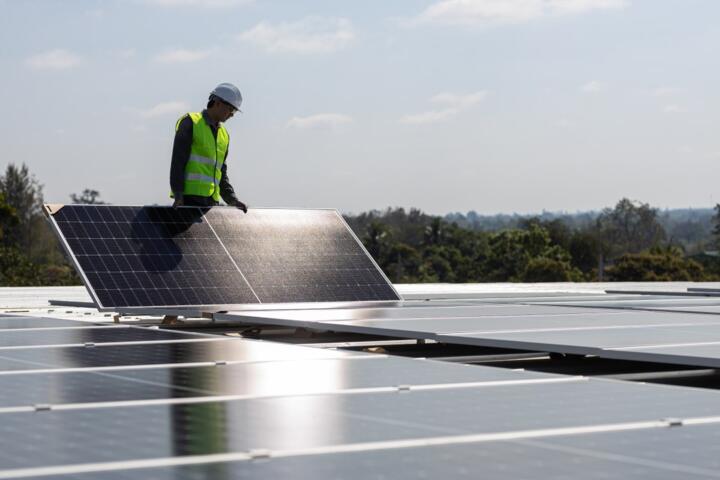
The Storage Landscape
Modern energy storage is no longer just about keeping the lights on during a storm; it is an arbitrage tool. By storing energy when rates are low (or from your own panels) and discharging it during "Peak" hours, you effectively bypass the most expensive electricity prices set by utilities like PG&E or ConEd.
In practice, a homeowner in California using a 10 kWh battery can save an additional $600 to $900 annually beyond their solar savings by navigating Time-of-Use (TOU) rates. According to SEIA, the cost of lithium-ion storage has dropped nearly 80% over the last decade, yet the "soft costs"—financing, permitting, and installation—still make up a significant portion of the ticket price.
Common Financial Pitfalls
The most frequent error homeowners make is failing to account for the "Investment Tax Credit (ITC) Leakage." When you lease a battery through a provider, the company, not you, claims the 30% federal tax credit. On a $15,000 system, that is $4,500 you are effectively handing over to the lessor in exchange for a lower monthly payment.
Another issue is underestimating the "Cycle Life" vs. "Lease Term." Most leases run for 20 or 25 years, but lithium-ion batteries typically have a performance warranty for 10 years or a specific throughput (e.g., 28 MWh). If your lease doesn't explicitly guarantee a free hardware replacement in year 11, you could be paying for a "brick" on your wall for the second half of the contract.
Strategic Funding Routes
Maximize the ITC Benefit
Purchasing outright allows you to claim the Residential Clean Energy Credit under Section 25D. This is a dollar-for-dollar reduction in your federal income tax liability. If you don't owe enough taxes in year one, the credit can currently be carried forward to future years, ensuring you recoup 30% of the total project cost, including labor and electrical upgrades.
Leverage HELOC Financing
If cash flow is tight but you want the benefits of ownership, a Home Equity Line of Credit (HELOC) often beats specialized solar loans. Solar loan providers like GoodLeap or Mosaic often charge "dealer fees" ranging from 15% to 30% of the principal to buy down the interest rate. A HELOC avoids these hidden fees and may offer tax-deductible interest if the funds are used for home improvement.
The PPA Secondary Market
For those choosing a Power Purchase Agreement (PPA) or lease, look for "Performance Guarantees." Companies like Sunrun or SunPower offer plans where they monitor the battery 24/7. If the battery capacity drops below a certain threshold (usually 70%), they replace it at zero cost. This "hands-off" approach works best for retirees or those who do not want to manage technical maintenance.
Utilizing VPP Programs
Virtual Power Plants (VPPs) allow you to get paid for your battery. Services like OhmConnect or the Tesla VPP program in Texas and Puerto Rico allow the utility to "borrow" your stored energy during grid emergencies. Direct owners keep 100% of these incentives, which can total $200–$400 per year, whereas some lease contracts claim a portion of this revenue.
Smart Capacity Sizing
Don't overbuy. A "whole-home" backup often requires two or three batteries (30kWh+), costing upwards of $30,000. Instead, use a smart electrical panel like Span. This allows you to prioritize "critical loads" (fridge, internet, lights) and shed "heavy loads" (dryer, AC) digitally. By buying one battery and a smart panel, you get the same utility for $10,000 less.
Battery Chemistry Matters
When buying, prioritize Lithium Iron Phosphate (LFP) over Nickel Manganese Cobalt (NMC). LFP batteries, like the Enphase IQ Battery or EG4 PowerPro, generally have longer cycle lives and better thermal stability. Since you own the asset, you want the chemistry that lasts 15 years rather than 10, maximizing your total "cost per cycled kWh."
Real-World Financial Cases
Case A: The Cash Buyer
The Miller family in Arizona purchased a 13.5 kWh Tesla Powerwall 3 for $14,200. They applied the 30% ITC ($4,260) and a local utility rebate of $1,500. Their net cost was $8,440. By avoiding the utility's demand charges and participating in a VPP, they save $1,100 annually. Their "break-even" point is approximately 7.6 years, with the battery expected to last 12-15 years.
Case B: The Strategic Lessee
A homeowner in Massachusetts chose a zero-down lease for a Sonnen battery system. They pay $85 a month. While they didn't get the tax credit, the lease includes a "Full Wrap" warranty. When the battery's inverter failed in year 4, the leasing company replaced it within 48 hours at no cost. For this homeowner, the "insurance" of the lease outweighed the equity of buying.
Comparative Analysis
| Feature | Outright Purchase | Third-Party Lease |
|---|---|---|
| Upfront Cost | $10,000 - $18,000 | $0 Down Typical |
| 30% Federal Tax Credit | Claimed by Homeowner | Claimed by Provider |
| Maintenance | Owner Responsibility | Included in Contract |
| Total 20-Year Cost | Lower (Highest ROI) | Higher (Interest/Fees) |
| Home Resale Value | Adds Direct Equity | Requires Lease Transfer |
Mistakes to Avoid
Never sign a lease without a "Pre-payment Map." Many homeowners find that if they want to sell their home in 5 years, the leasing company demands an exorbitant buyout price that exceeds the battery's market value. Always ensure the contract allows for a smooth transfer to the next homeowner or has a fair market value buyout clause after year five.
Avoid "Siloed Systems" if buying outright. Ensure your battery is compatible with multiple inverter brands. If you buy a proprietary system and that company goes bankrupt (as seen with several smaller firms recently), getting replacement parts or software updates becomes a nightmare. Stick to established ecosystems like Enphase, FranklinWH, or Tesla.
Frequently Asked Questions
Is the 30% tax credit still available in 2026?
Yes, the Inflation Reduction Act extended the 30% Residential Clean Energy Credit through 2032. It applies to both solar panels and stand-alone battery storage with a capacity of 3 kWh or greater.
Can I add a battery to my existing solar later?
Yes, this is called "AC Coupling." Systems like the Enphase IQ or Schneider Electric's storage solutions can be added to almost any existing solar array, though labor costs for retrofitting are slightly higher than installing all at once.
Does a battery actually increase home value?
Zillow data suggests homes with solar energy systems sell for about 4.1% more. While batteries are newer, appraisers in markets like Hawaii and California are increasingly adding "Green Addendums" to valuations for homes with reliable backup storage.
What happens if I move before the lease ends?
You generally have two options: transfer the lease to the new buyer or buy out the remaining contract. Most modern leases are transferable, but the new buyer must meet credit requirements, which can occasionally complicate a home sale.
Which is better for high-inflation environments?
Buying outright or using a fixed-rate loan is superior. Leases often include an "escalator clause" where your monthly payment increases by 2.9% or more each year, which can erode your savings over a two-decade period.
Author’s Insight
Having analyzed hundreds of residential energy contracts, I’ve noticed that "peace of mind" is often priced too high in the leasing market. If you have the tax liability to use the ITC, buying is almost always the mathematically superior choice. I personally recommend exploring "Green Loans" through credit unions, which often offer better terms than national solar lenders. My top tip: Always ask for the "Total Cost of Ownership" over 15 years, not just the monthly payment.
Conclusion
Choosing between leasing and buying a battery comes down to your tax situation and your desire for long-term equity. Ownership yields the highest ROI through the 30% federal tax credit and increased home value, while leasing offers a low-risk entry point with guaranteed maintenance. For the best results, get at least three quotes, check for LFP battery chemistry, and verify that your system is sized for your actual critical loads rather than a generic estimate. Prioritize ownership if you plan to stay in your home for more than seven years.