Market Landscape
The connectivity market has fractured into two distinct camps: fixed physical infrastructure and rapidly evolving satellite constellations. While fiber-optic networks offer the highest theoretical ceiling for data transmission, their deployment is physically constrained by trenching costs, often exceeding $30,000 per mile in rural sectors.
In practice, a rancher in Montana might find that while a local ISP quotes $150/month for "High-Speed DSL," the actual delivered speed hovers around 10 Mbps due to loop length attenuation. Conversely, orbital solutions now provide 150-250 Mbps down, fundamentally altering the value proposition for those outside the "fiber footprint."
Current data shows that 27% of rural households still rely on connections under 25 Mbps. Meanwhile, the leading satellite provider has deployed over 6,000 small satellites to close this gap, bringing sub-40ms latency to regions where 600ms was previously the norm for geostationary options like Viasat or HughesNet.
Common Deployment Gaps
Many users fall into the "Unlimited Trap," where they subscribe to a plan based solely on the monthly price tag without auditing the Fair Use Policy (FUP). For instance, a DSL plan might be cheap, but its inability to handle simultaneous 4K streams and Zoom calls results in "soft" costs—lost work hours and frustration.
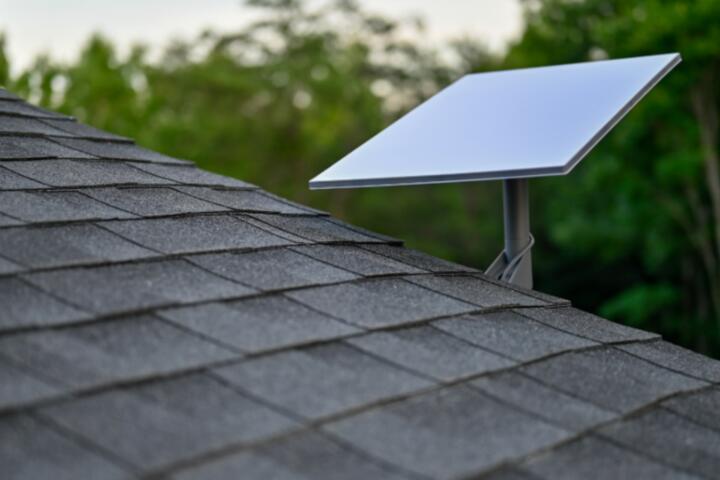
Overlooking "Clear View of Sky" requirements is another critical failure. Unlike a cable that plugs into a wall, orbital receivers require an unobstructed 110-degree field of view. A single Douglas fir tree can trigger micro-outages that drop VPN sessions, rendering a $120/month subscription useless for professional remote work.
The consequences of poor technology selection are often financial anchors. Customers sign two-year contracts for legacy satellite or DSL services, only to realize the "unlimited" data is throttled after 50GB. This leads to early termination fees (ETFs) that can range from $200 to $400 when they finally decide to switch to a more modern solution.
I recently consulted for a construction site office that opted for a 4G LTE hotspot to save on hardware costs. Within three weeks, they exceeded their data cap, and overage charges totaled $600—triple the cost of a standard orbital kit and monthly service combined.
Strategic Connectivity
Evaluating Total Ownership
To find the true cost, you must calculate the Total Cost of Ownership (TCO) over 24 months. Fiber usually has a $0-$99 install fee, while orbital kits require an upfront investment of $599 (Standard) or $2,500 (High Performance).
However, if fiber isn't at your curb, the "construction fee" is the hidden killer. Orbital solutions work because they bypass the need for local government permits and physical digging. On a 2-year horizon, the $120/month satellite fee plus hardware equals roughly $3,479, which often beats the "special construction" costs of terrestrial providers.
Latency vs. Raw Bandwidth
Stop focusing on "Download Speed" alone. For gaming, VoIP, and day-to-day cloud syncing, latency (ping) is the primary driver of perceived quality. Fiber sits at 5-15ms, orbital at 25-50ms, and DSL often spikes to 100ms+ under load.
If your household has multiple people on Microsoft Teams, the low-latency nature of LEO satellites makes it a viable fiber competitor. If you only watch Netflix, a stable 25 Mbps DSL line for $50/month is actually the more fiscally responsible choice over a $120/month satellite plan.
The Hardware Factor
Orbital systems are self-installable, using apps like the Starlink App to scan for obstructions. This saves the $150 "Professional Installation" fee typical of Comcast or Spectrum. Use tools like the "Obstruction Tool" before buying to ensure your roof or yard is compatible.
For high-demand users, the "Flat High Performance" dish is necessary for in-motion use or extreme weather. While expensive, the reliability in snow and heat prevents the "downtime tax" that cheaper, consumer-grade hardware incurs during summer storms or heavy blizzards.
Data Caps and Throttling
Fiber is almost always truly unlimited. DSL is usually unlimited but slow. Orbital providers have toyed with "Priority Access" tiers. If you are a power user (3TB+ per month), fiber is the only logical choice. If fiber is absent, ensure you select a "Standard" residential satellite plan which currently lacks a hard data cap in most regions.
Backup and Redundancy
For businesses, the best solution isn't "Either/Or"—it's "Both." Using a Peplink Balance router to bond a cheap DSL line with an orbital satellite link provides 99.9% uptime. This "SD-WAN" approach ensures that if a backhoe cuts the fiber line, the satellite takes over instantly.
Efficiency Case Studies
Rural Tech Consultant
A freelance developer in rural Vermont moved from a 5 Mbps DSL line ($70/month) to an orbital satellite service ($120/month + $599 hardware). While her monthly bill rose by $50, her billable hours increased by 15% because she no longer spent hours waiting for Docker containers to pull or GitHub repos to sync.
The $599 hardware investment was recouped in exactly three weeks of increased productivity. Her "cost per Mbps" dropped from $14.00 to $0.60, representing a massive leap in economic efficiency.
Remote Logistics Hub
A logistics firm in an industrial park was quoted $12,000 for a fiber build-out. Instead, they deployed two orbital dishes in a load-balanced configuration. Total setup cost was $1,200 (hardware) and $240/month (service).
They saved $10,800 in CAPEX. Even with the higher monthly satellite fee, it would take them over 4 years to reach the cost of the initial fiber installation, by which time 6G or newer satellite generations will likely be available.
Service Matrix
| Feature | LEO Satellite | Fiber-Optic | Legacy DSL |
|---|---|---|---|
| Upfront Cost | $599 - $2,500 | $0 - $100 | $0 - $50 |
| Monthly Fee | $120 | $60 - $100 | $40 - $80 |
| Typical Speed | 150+ Mbps | 1,000+ Mbps | 5 - 25 Mbps |
| Latency | 25ms - 50ms | <15ms | 40ms - 150ms |
| Availability | Global (Open Sky) | Urban/Suburban | Wide (Existing Copper) |
Avoiding Costly Errors
The biggest mistake is ignoring the "Roam" vs. "Residential" distinction. Roam (Mobile) plans are de-prioritized, meaning during peak hours (6 PM - 10 PM), your speeds could drop to 5 Mbps. Always opt for a "Residential" fixed address plan if you aren't moving.
Don't trust "Up to" speeds in ISP marketing. Use sites like Speedtest.net or BroadbandNow to see real-world neighbor reports for DSL and Fiber in your specific zip code. If the local fiber provider has a 2-star rating for reliability, the "expensive" satellite option might actually be cheaper when you factor in the cost of a cellular backup.
Another error is failing to ground the equipment. Satellite dishes are lightning magnets. Skipping a $50 surge protector can result in a fried $600 dish, an expense no warranty covers. Always factor in professional mounting hardware ($50-$150) rather than just "setting it on the lawn."
FAQ
Is satellite better than fiber for gaming?
No. Fiber remains the gold standard for gaming due to stable, single-digit jitter and low latency. Satellite is "playable" for casual gaming, but competitive players will notice the 30ms-40ms gap.
Can I take my residential dish on a road trip?
Only if you enable "Portability" or switch to a Roam plan, which usually costs an extra $30/month. The standard residential service is geofenced to your registered service address.
Does rain affect the connection?
Heavy localized downpours can cause "rain fade," temporarily slowing speeds. However, LEO satellites are far more resilient than old-school Dish TV or HughesNet because the signal doesn't have to travel as far through the atmosphere.
Why is my DSL so much slower than advertised?
DSL speed is dictated by your distance from the Central Office (CO). If you are more than 2 miles away, the signal degrades significantly. Unlike satellite, DSL performance is physically limited by the quality of aging copper wires.
How much power does the satellite dish use?
The standard dish pulls about 50-75 Watts. Over a month, this adds about $5-$10 to your electricity bill, a hidden cost many forget to compare against low-power fiber ONTs.
Author’s Insight
I have lived on both sides of the "digital divide," having managed server farms on dedicated fiber and working from a van using orbital arrays. My takeaway is that we are entering an era of "hybrid connectivity." Never rely on a single path if your income depends on it. I currently recommend using fiber as your primary line if available, but keeping a satellite kit deactivated in the closet as a "break-glass-in-case-of-emergency" backup—it’s the best insurance policy a remote professional can buy.
Summary
When comparing modern satellite solutions to traditional landlines, the winner is determined by your geography. If fiber is available at your address, its superior latency and lower TCO make it the undisputed choice. However, if you are currently struggling with sub-25 Mbps DSL or high-latency legacy satellite, the $600 entry fee for a LEO system is a transformative investment that pays for itself through reclaimed time and reliability. Audit your sky view, calculate your 24-month spend, and prioritize latency over marketing fluff to ensure your home office remains truly connected.