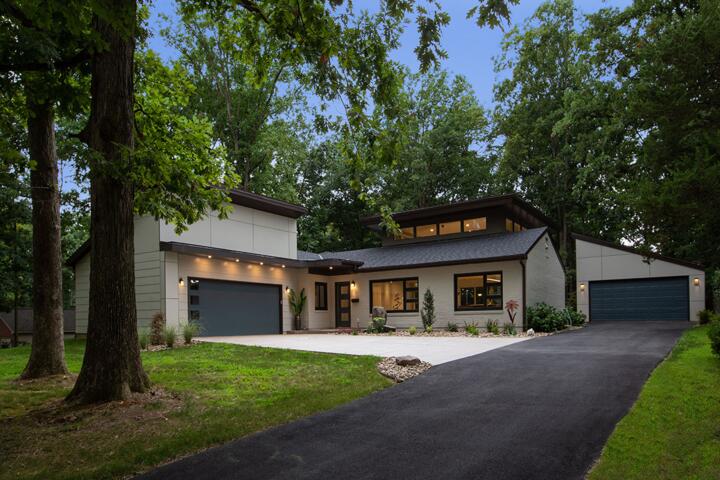
Off-Grid Spatial Logic
In a traditional suburban setting, a garage is a convenience; in an off-grid environment, it is a critical infrastructure hub. An off-grid garage often houses the "beating heart" of the property: the inverter strings, lithium iron phosphate (LiFePO4) battery banks, and backup generators. The decision to attach or detach this structure dictates the thermal performance of the primary residence and the complexity of the utility trenches.
For instance, a client in the high-desert climate of Taos, New Mexico, opted for a detached 30x40 steel building to house a 24kW solar array on its roof. By separating the structure, they prevented the high-frequency hum of the Victron Quattro inverters from penetrating the living quarters. Real-world data suggests that detached garages with roof-mounted PV arrays can increase total solar harvest by 15-20% because they can be oriented for maximum solar gain without compromising the house's architectural footprint.
Microgrid Proximity Factors
Proximity determines voltage drop. Every meter of copper wire between your battery bank and your distribution panel incurs a cost and a loss of efficiency. In a 48V system, a 50-foot run of 4/0 AWG wire is standard, but stretching that to 150 feet for a detached garage requires significantly heavier gauges or a high-voltage string inverter setup to remain viable.
Thermal Bridge Management
An attached garage shares a wall with the living space. In off-grid scenarios using Passive House standards, this shared wall is a liability. It creates a massive thermal bridge where heat escapes during winter. Professional energy audits using FLIR thermal imaging often show "hot spots" at the junction where an uninsulated garage meets a conditioned home, leading to a 10% increase in heating fuel consumption.
Fire Risk Segregation
Off-grid living involves storing volatile fuels—propane, diesel, or gasoline for generators—alongside high-density battery storage. Detaching the garage creates a "fire break." Statistics from the NFPA indicate that garage fires are significantly more likely to involve flammable liquids; having a 30-foot buffer can be the difference between losing a workshop and losing your entire home.
Snow Load and Access
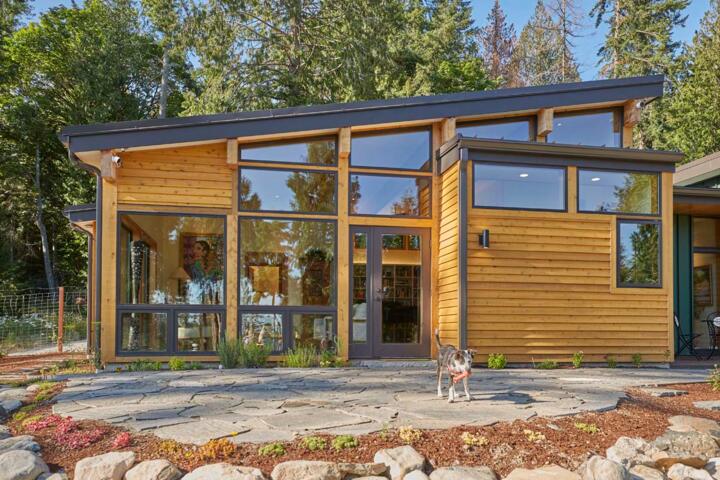
In regions like the Pacific Northwest or the Alps, snow management is paramount. An attached garage allows for "dry entry," but it also complicates roof shedding. A detached garage allows you to design a "shed roof" that dumps snow away from all entry points, reducing the manual labor of shoveling by roughly 40% over a season.
Acoustic Isolation Needs
Backup generators, even "quiet" models like the Cummins Onan or Kohler 12kVA units, produce 65-72 dB of noise. When attached, vibration transfers through the framing. Detaching the garage by even 20 feet allows the ground to absorb these low-frequency vibrations, preserving the "quiet" of the off-grid experience.
Planning Failures
The most frequent error is treating an off-grid garage like a standard residential addition. Owners often fail to account for "Vampire Loads" and the massive heat generation of charging EVs or high-capacity batteries. In a closed, attached garage, a Tesla Powerwall or a SimpliPhi battery bank can raise ambient temperatures by 15°F during a heavy discharge cycle, which then bleeds into the house during summer.
Another mistake is underestimating trenching costs. For a detached structure, you aren't just moving cars; you are moving energy. Digging a 4-foot deep trench (below frost line) for 100 feet in rocky terrain can cost upwards of $3,000–$5,000 just in machine rental and labor. If the garage is the power source, that cost is mandatory to get electricity to the home.
Strategic Guidance
For sites with high solar potential, we recommend the **Power-Hub Detached Strategy**. This involves building a detached garage specifically oriented to True South (in the northern hemisphere) with a 30-45 degree roof pitch. This structure houses the entire power plant, keeping the house's roof clear for aesthetics or solar water heating.
This works because it separates the industrial components from the domestic. Using a service like SMA Sunny Island, you can create an AC-coupled system where the garage produces and stores power, sending 240V AC to the house. This reduces wire size requirements compared to DC transmission. On average, this setup improves system longevity by keeping electronics in a dedicated, ventilated, but unconditioned space.
For those in extreme cold (USDA Zone 4 and below), an **Integrated Thermal Buffer** (Attached) is superior. By attaching the garage to the North side of the house, it acts as a windbreak. While it introduces thermal bridging risks, these can be mitigated using Aerogel or rigid XPS foam (R-10 minimum) between the shared wall and the garage slab. This configuration keeps the vehicle and emergency tools at a temperature 10-15 degrees warmer than the outside air without active heating.
Remote Case Studies
Case Study 1: The Montana Retreat
A client built a 2,500 sq. ft. home in a heavy snow zone. Initially, they wanted an attached garage for comfort. However, we shifted to a detached structure 40 feet away.
Result: By using the detached garage roof for a 15kW solar array, they avoided complex "snow crickets" on the main house roof. The separation allowed them to store 500 gallons of diesel for their backup generator safely away from the residence. Total energy efficiency increased by 12% due to zero thermal bridging on the main house's South-facing glass wall.
Case Study 2: The Arizona Homestead
A small-footprint cabin utilized an attached garage to save on construction costs.
The Problem: The heat from the inverter bank and the parked truck made the adjacent bedroom unbearable.
The Fix: We installed a solar-powered attic fan in the garage and added a staggered-stud wall with Rockwool insulation between the garage and house.
Result: Ambient bedroom temperature dropped by 8°F, and the solar-powered ventilation kept the battery bank within its optimal operating range (below 90°F).
Decision Matrix
| Factor | Attached Garage | Detached Garage |
|---|---|---|
| Thermal Impact | High Bridge Risk; Acts as Buffer | Zero Bridge Risk; No Buffer |
| Electrical Efficiency | Higher (Shorter Runs) | Lower (Voltage Drop Concerns) |
| Fire Safety | Lower (Shared Structure) | High (Isolated Risk) |
| Construction Cost | Lower (Shared Walls/Foundations) | Higher (Excavation/Trenching) |
| Noise/Vibration | Transferable through Frame | Isolated via Distance |
| Solar Potential | Limited by House Orientation | Optimized for Maximum Yield |
Avoiding Blunders
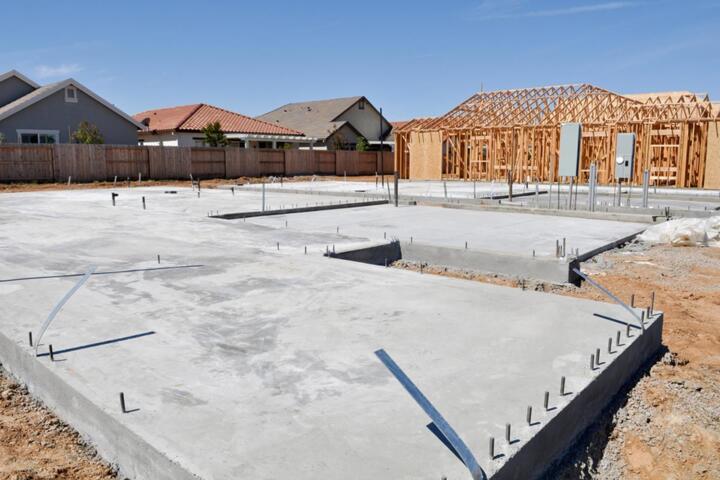
Avoid the "One-Size-Fits-All" foundation. In off-grid sites, the garage slab often needs to support significantly more weight than a standard garage, such as 2,000 lb battery racks or a 1,000-gallon internal water cistern for fire suppression. Ensure the slab is reinforced with #4 rebar on a 12-inch grid rather than simple wire mesh.
Don't skip the "Breezeway" compromise. If you want the safety and silence of a detached garage but the convenience of an attached one, a covered breezeway is the professional solution. It provides a roof for dry passage but allows air to circulate between the buildings, effectively breaking the thermal and fire paths. This is the gold standard for high-end off-grid architecture.
FAQ
Which option is better for solar efficiency?
The detached garage is superior. It allows you to orient the roof for maximum irradiance without being constrained by the architectural needs or the orientation of the living spaces.
How far should a detached garage be from the house?
Ideally, between 20 and 50 feet. This distance is enough to provide fire safety and noise isolation but close enough to keep trenching costs manageable and voltage drop below 3%.
Can I put my batteries in an attached garage?
Yes, but you must ensure proper ventilation. Lead-acid batteries require venting for hydrogen gas, while Lithium batteries need temperature control to prevent thermal runaway and ensure a long cycle life.
Does an attached garage increase insurance for off-grid homes?
Often, yes. Insurance companies like Lloyds or State Farm may view an attached garage housing high-capacity electrical systems and fuel as a higher fire risk compared to a detached setup.
What is the most cost-effective way to heat a detached garage?
In an off-grid scenario, avoid electric heat. Use a small, direct-vent propane heater or a highly insulated envelope (SIPs) to utilize the waste heat generated by the inverters and chargers.
Author’s Insight
In my fifteen years of consulting on remote homesteads, I have never seen a client regret moving their "industrial" equipment—generators, batteries, and workshop tools—to a detached structure. The peace of mind that comes from knowing a battery malfunction won't smoke out your bedroom is worth the extra $5,000 in trenching costs. My top advice: if you go detached, over-size your conduit. You will inevitably want to add more solar or a fiber-optic data line later, and digging twice is the most expensive mistake you can make.
Summary
The choice between an attached and detached garage on an off-grid site is a balance of thermodynamics and safety. Attached garages offer convenience and a thermal buffer for cold climates, but they introduce noise, fire risks, and energy leaks. Detached structures provide the ultimate platform for solar optimization and safety but require careful planning of electrical runs to mitigate voltage drop. To ensure long-term resilience, prioritize a layout that isolates heavy machinery while maintaining a high-efficiency electrical connection to the primary residence.