Triangular Living
The A-frame is characterized by its steep, rafter-to-ground roofline that eliminates the need for traditional load-bearing walls. Originally popularized in the 1.950s by architects like Andrew Geller, this style was a response to the need for affordable, kit-built vacation homes. Today, the trend has evolved from rustic cabins to luxury retreats integrated with smart home technology.
In professional practice, I’ve seen A-frames utilized primarily in snow-heavy regions like Lake Tahoe or the Alps. The 60-degree roof pitch isn't just a stylistic choice; it's a mechanical solution. Snow slides off immediately, preventing the structural collapse often seen in flat or low-pitch roofs during heavy winters.
Statistical data from architectural surveys indicates that while A-frames can be up to 20% cheaper in raw framing materials, they often incur 15% higher costs in specialized insulation and custom window glazing. Modern iterations now frequently use SIPs (Structural Insulated Panels) to meet rigorous energy codes that the original designs ignored.
A-Frame Obstacles
The most frequent mistake in A-frame construction is the "dead zone" trap. Because the walls slant inward, the perimeter floor space becomes unusable for standard furniture. Builders often fail to account for the loss of 25-30% of total floor area due to low ceiling heights at the edges.
Thermal stratification is another severe pain point. Heat naturally rises to the peak of the triangle, leaving the main living floor cold while the loft becomes uncomfortably hot. Without a high-volume HVLS (High-Volume Low-Speed) fan or a sophisticated HVAC zoning system, energy bills can skyrocket during peak summer and winter months.
Real-world consequences include moisture buildup. Because the roof *is* the wall, any leak in the roofing membrane immediately compromises the interior living space. I have consulted on renovations where improper flashing at the skylights led to systemic rot in the primary rafters, costing the owners over $40,000 in structural repairs.
Strategic Implementation
Optimizing the Kneewall Ratio
To solve the "dead zone" issue, professional designers implement short kneewalls (3-4 feet high) before the roof slope begins. This raises the entire structure, allowing for standard furniture placement against the perimeter. This minor adjustment increases usable square footage by approximately 18% without significantly altering the iconic silhouette.
Advanced Thermal Management
Utilizing closed-cell spray foam insulation is non-negotiable for modern A-frames. Traditional fiberglass batts sag over time in slanted cavities, creating air gaps. By using spray foam with an R-value of R-6 per inch, you create a seamless vapor barrier that prevents the "chimney effect" common in triangular homes.
Custom Fenestration Planning
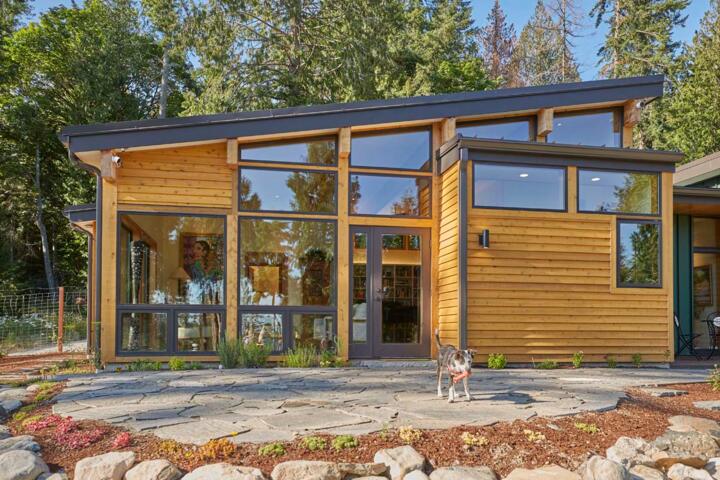
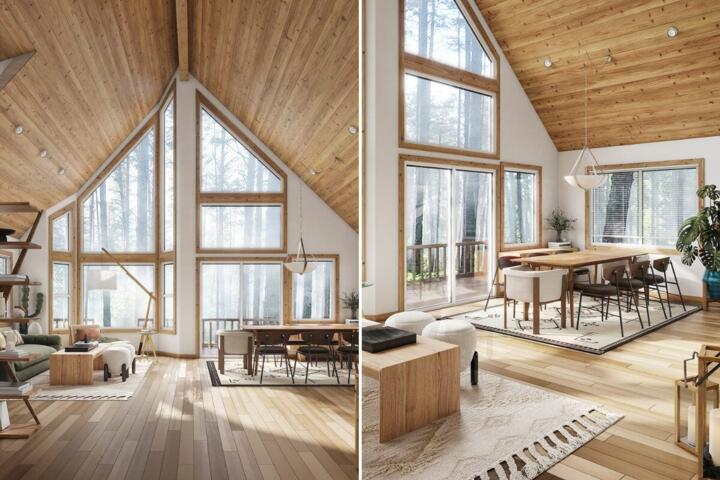
The "glass wall" facade is the signature of this style. To manage solar gain, use Triple-Pane Low-E glass with a Solar Heat Gain Coefficient (SHGC) below 0.25. Brands like NanaWall or Andersen offer specialized folding glass systems that allow the home to breathe, reducing the mechanical cooling load by up to 30%.
Integrated Storage Systems
Standard cabinets don't work in a triangle. The solution is custom built-in joinery that follows the roof angle. Using services like Rev-A-Shelf for pull-out hardware allows you to utilize the deepest parts of the corners for pantry storage or utility housing, ensuring no space is wasted.
Zoning and Permit Navigation
A-frames often struggle with "Maximum Ridge Height" restrictions. In many suburban zones, the height required to get a functional second floor exceeds local limits. Work with a land-use consultant to apply for "Average Grade" height calculations, which can provide an extra 3-5 feet of allowable vertical space.
Project Success Metrics
A developer in the Catskills, NY, aimed to build a sustainable A-frame community. The challenge was balancing the "Instagrammable" look with year-round occupancy comfort. They pivoted from traditional stick-framing to a prefabricated kit model provided by Avrame or Den Outdoors.
By using a CNC-cut kit, they reduced construction waste by 40% and cut the onsite labor timeline from 6 months to 10 weeks. The final units achieved a 5-star energy rating. Post-occupancy data showed these A-frames commanded a 65% higher ADR (Average Daily Rate) on platforms like Airbnb compared to traditional cabin styles in the same zip code.
Another case involved a private residence in Oregon where the owner installed a hydronic radiant floor heating system paired with a Mitsubishi mini-split for the loft. This specific combination solved the heat distribution issue, resulting in a consistent 72°F temperature throughout the 2,400 sq. ft. space with a monthly utility cost of under $150.
Operational Comparison
| Feature | Traditional Gable Home | Modern A-Frame Structure |
|---|---|---|
| Construction Complexity | Medium - Standard framing | High - Requires crane/special rigging |
| Material Efficiency | Average | High - Roof and walls are integrated |
| Maintenance Needs | Standard siding/roof care | High - Extensive roofing surface |
| Interior Volume | 100% usable | 70-75% usable (due to slopes) |
| Resale Velocity | Steady market | High demand for niche/short-term rental |
Preventing Failures
Do not overlook the "Valley Flashings." A-frames with dormers are notorious for leaks where the dormer meets the main roof. Use high-grade copper or heavy-gauge steel flashing rather than aluminum. Aluminum expands and contracts too much in extreme temperatures, leading to seal failure within 5-7 years.
Avoid undersizing the rafters. Modern building codes require specific "Live Load" capacities for snow and wind. Many DIY-level A-frame plans use 2x10 rafters, but for a 24-foot span, 2x12 or even LVL (Laminated Veneer Lumber) beams are necessary to prevent the roof from "spreading" or sagging over time.
Finally, never skip the ERV (Energy Recovery Ventilator). Because a well-insulated A-frame is essentially a sealed tent, air can become stagnant quickly. An ERV ensures a constant supply of fresh air while retaining 70% of the interior temperature, preventing mold growth in the tight apex of the triangle.
FAQ
Is an A-frame house cheaper to build?
Initially, yes, due to fewer wall components. However, custom windows and specialized insulation often bring the total cost per square foot to $200-$350, which is comparable to or higher than standard builds.
How do you cool the loft in summer?
The most effective method is a dedicated mini-split head located at the highest point of the loft, paired with an exhaust fan to pull hot air out of the peak.
Are A-frames energy efficient?
They can be, but their shape is naturally inefficient for heat distribution. Efficiency depends entirely on the quality of the thermal envelope and the use of continuous exterior insulation.
Can A-frames withstand high winds?
Yes, their aerodynamic shape allows wind to flow over the structure rather than hitting a flat vertical wall, making them excellent choices for hurricane or high-wind zones.
What is the biggest drawback for families?
The lack of privacy. The open-loft nature of the design means sound travels easily between floors, and closet space is often very limited compared to traditional homes.
Author’s Insight
Having evaluated dozens of mountain properties, I’ve concluded that the A-frame is the ultimate "experience" house but requires disciplined design to be a "forever" house. My recommendation is to always prioritize the foundation height; a raised A-frame solves almost every storage and utility complaint. If you are building for ROI, focus 40% of your budget on the glass facade—it is the primary driver of property value and occupant satisfaction.
Summary
The A-frame remains a powerful architectural statement that bridges the gap between nature and shelter. While it offers unmatched aesthetic appeal and structural resilience in harsh climates, the practical challenges of interior volume and thermal regulation cannot be ignored. To succeed, builders must utilize modern materials like SIPs and custom built-ins. For those seeking a unique lifestyle or a high-yield investment, the A-frame is a viable solution, provided you design from the inside out to maximize every inch of the triangular footprint.