Engineering Reality
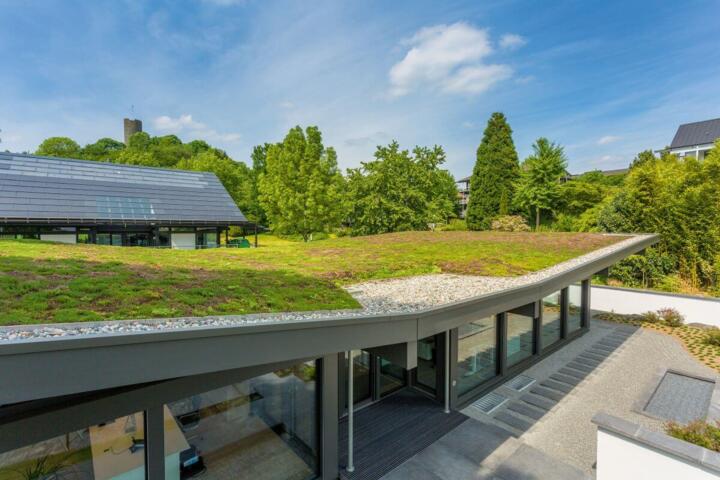
In the context of green architecture, a "flat" roof is never truly level. Professional installations incorporate a slight taper, usually a 1:80 fall, to direct water toward internal drains or scuppers. Unlike sloped roofs that shed water via gravity, flat systems rely on a continuous waterproof membrane to resist hydrostatic pressure. For those incorporating "living" elements, the roof must also act as a root barrier and support significant dead loads, often exceeding 150 kg per square meter for intensive green roofs.
Recent data from the National Roofing Contractors Association (NRCA) suggests that nearly 40% of flat roof issues stem from improper drainage rather than material failure. In sustainable builds, "ponding"—water that remains for more than 48 hours—is the primary catalyst for membrane degradation and organic growth that can compromise the building's thermal envelope.
Flat Roof Vulnerabilities
The most significant pain point for homeowners is the failure of flashings at "penetrations" (vents, skylights, and solar mounts). Because flat roofs expand and contract with temperature swings, rigid seals often crack, allowing moisture to seep into the insulation board. Once the insulation is saturated, its R-value drops to nearly zero, skyrocketing your energy costs and negating the "green" benefits of the structure.
Furthermore, many owners fail to realize that green roofs require a specialized root-resistant layer. Standard bitumen or felt can be pierced by the aggressive root systems of certain sedums or weeds, leading to "silent leaks" that are not discovered until structural timber rot occurs. These repairs often cost five times the original installation price because the entire garden layer must be excavated to locate a pinhole leak.
Waterproofing Strategies
Selecting High-Performance Membranes: EPDM vs. TPO
For long-term waterproofing, EPDM (Ethylene Propylene Diene Terpolymer) is a top-tier choice. It is a synthetic rubber that is highly resistant to UV radiation and thermal shock. Alternatively, TPO (Thermoplastic Polyolefin) is highly reflective, reducing the "heat island effect" in urban areas. Both materials offer seams that are either chemically bonded or heat-welded, creating a monolithic surface that is far superior to traditional torch-on felt.
The Importance of a Multi-Layered Drainage System
Underneath a green roof, you must install a "drainage mat" or "egg-crate" layer. Products like Delta-Floraxx provide a space for water to flow freely to the drains while retaining just enough moisture for the plants. This prevents the soil from becoming anaerobic and heavy, which protects the structural integrity of the roof deck. Without this layer, the weight of standing water in the soil can lead to ceiling deflection.
Routine Debris Management and Scupper Clearing
The most effective maintenance tool is a simple broom. Debris, such as fallen leaves or bird nests, tends to congregate around drains. If a drain is blocked, a flat roof can quickly become a swimming pool. Use wire mesh leaf guards on all outlets. A bi-annual inspection—specifically after the autumn leaf fall and the spring thaw—is the industry standard for preventing catastrophic overflows.
Utilizing Liquid-Applied Membranes for Complex Geometry
Where many pipes or solar racks penetrate the roof, traditional sheet membranes often fail. Professional contractors use liquid-applied systems like KEMPEROL or SikaFill. These resins cure into a seamless, fleece-reinforced rubber skin that conforms to any shape. This is the "gold standard" for waterproofing complex green roof layouts where traditional cutting and pasting of sheets would create too many weak points.
Implementing Electronic Leak Detection (ELD)
For large green roofs, finding a leak under layers of soil is a nightmare. Leading experts recommend installing a Vector Mapping grid during construction. By applying a low-voltage electrical charge to the roof surface, technicians can pinpoint a hole within millimeters without removing the vegetation. While it adds roughly 5% to the initial cost, it saves thousands in diagnostic labor over the roof's life.
Biological Maintenance for Living Roofs
Maintenance isn't just about the membrane; it's about the flora. Ensure you are using "low-maintenance" sedums that don't require heavy irrigation. Over-watering a flat roof increases the load and the risk of moisture migration. Use a slow-release, non-clogging fertilizer twice a year to keep the coverage dense, which naturally protects the underlying membrane from UV degradation.
Rooftop Success Cases
Case Study 1: The Urban Retrofit
A small commercial building in Seattle suffered from chronic leaks in their traditional felt roof. They stripped the surface and installed a 60-mil Firestone RubberGard EPDM system followed by an extensive sedum tray system. By switching to a seamless rubber membrane, they eliminated 12 separate leak points. Result: A 100% dry interior for six years and a 15% reduction in cooling costs during summer peaks.
Case Study 2: Solar Integration
A residential eco-home in Colorado used a white TPO membrane to enhance solar panel efficiency (via albedo effect). The owners implemented a quarterly "sweep and seal" check-list focusing on the solar mounting feet. By using M-1 Polyether sealant on all penetrations annually, they have maintained a watertight seal despite the extreme high-altitude UV exposure that usually destroys standard roofs in under a decade.
Maintenance Checklist
| Task Item | Frequency | Priority | Required Tools |
|---|---|---|---|
| Clear Drains | Quarterly | Critical | Gloves, Trowel |
| Inspect Seals | Bi-annually | High | Moisture meter |
| Weeding | Seasonally | Medium | Hand tools |
| UV Coating | 5 Years | Medium | Silicone coat |
| Patch Check | Annually | High | Seam tape |
Common Mistakes
One of the most frequent errors is using high-pressure washers to clean the roof. While it seems efficient, the high PSI can tear the seams of TPO or EPDM membranes and force water under the laps. Always use a low-pressure garden hose and a soft-bristle brush. Another mistake is ignoring "blisters"—air bubbles that form between the membrane and the deck. Never pop these yourself; they indicate moisture trapped in the system and require professional venting to prevent the rot from spreading.
FAQ
How long should a properly maintained flat roof last?
With high-quality materials like EPDM or TPO and consistent maintenance, a flat roof should last 25 to 30 years. Green roofs can actually extend this life to 50 years by shielding the membrane from UV rays and temperature fluctuations.
Can I walk on my flat roof to maintain the garden?
Yes, but you should install "walkway pads" in high-traffic areas. Constant foot traffic can compress the insulation underneath and eventually puncture the membrane against the roof deck.
Is a green roof too heavy for a standard flat roof?
Not necessarily, but you must consult a structural engineer. "Extensive" green roofs (shallow soil) are often compatible with modern builds, whereas "intensive" gardens (trees/shrubs) require reinforced concrete or steel joists.
What is the best way to find a leak on a flat roof?
Wait for a dry day and perform a "flood test" by plugging the drains and adding an inch of water. However, the most modern and non-destructive method is Infrared Thermography, which detects temperature differences in wet insulation at night.
Does a white roof really save money?
Yes. A "Cool Roof" (white TPO or PVC) can stay 30°C cooler than a black roof in direct sunlight, significantly reducing the workload on your HVAC system and preventing the "thermal shock" that causes seams to split.
Author’s Insight
Over the years, I've seen that the most "sustainable" roof isn't the one with the most plants, but the one that never needs to be replaced. Every time you tear off a roof, you're sending tons of non-biodegradable material to a landfill. My biggest piece of advice is to invest in the thickest membrane you can afford (at least 60-mil) and never skip the annual inspection. A $20 tube of high-grade sealant applied in October can save you from a $20,000 interior restoration in January. Treat your roof like the engine of your home; it needs oil changes and checkups to keep the whole system running.
Summary
Successful flat roofing for green living is a balance between biological health and mechanical integrity. By prioritizing high-grade membranes like EPDM, ensuring unobstructed drainage paths, and utilizing modern diagnostic tools like electronic leak detection, you can enjoy the ecological benefits of a rooftop space without the fear of structural damage. The most actionable advice is to establish a documented maintenance log today; consistency is the only way to ensure your sustainable investment survives the elements for decades to come.