Thermal Dynamics
A ventilated facade is essentially a "second skin" for a building, creating a continuous air cavity between the external cladding and the inner structural wall. This cavity leverages the "stack effect," where temperature differences cause air to rise, naturally carrying away moisture vapor before it can condense on the wood. Unlike traditional direct-attachment siding, this system ensures the wooden substrate remains dry even during heavy rain or high humidity cycles.
In practice, consider a CLT (Cross-Laminated Timber) project in a coastal climate like Seattle. Without ventilation, solar vapor drive pushes moisture inward toward the cooler interior, where it hits the dew point. A 20mm ventilation gap reduces this vapor pressure by up to 85%, significantly lowering the moisture content of the timber. Research by the Fraunhofer Institute indicates that ventilated systems can reduce cooling energy demands by 20% in summer due to the heat-shielding effect of the moving air layer.
Moisture Hazards
The primary failure in modern wood construction is the "vapor sandwich." This occurs when builders install non-breathable insulation or vapor barriers on both sides of a wall, trapping construction moisture or accidental leaks. In wooden homes, this leads to Serpula lacrymans (dry rot) or black mold (Stachybotrys chartarum), which can degrade structural integrity within just three to five years of occupancy.
Many contractors mistakenly rely on heavy caulking to keep water out. However, water always finds a way in—via capillary action through screw holes or micro-cracks. The real danger isn't the water getting in; it's the water not being able to get out. A house in Vermont recently required a $40,000 remediation because the cedar siding was nailed directly to the OSB sheathing without a drainage plane, leading to total sheathing rot behind a seemingly perfect exterior.
System Engineering
Selecting High-Perm Membranes
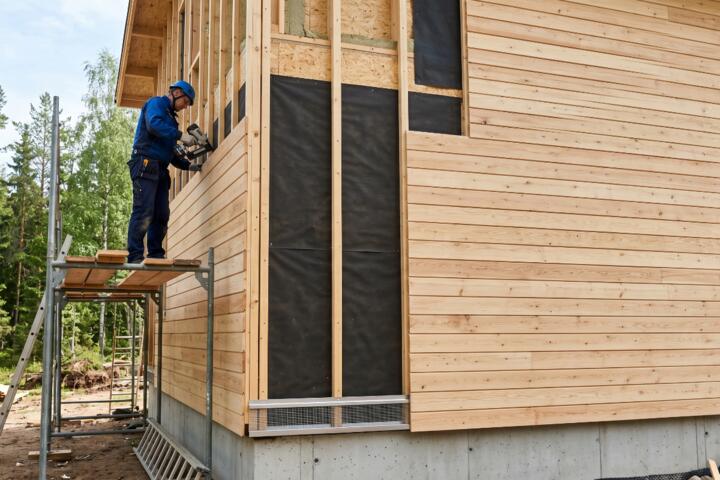
The first line of defense is the Weather Resistive Barrier (WRB). For wood homes, you need a high-performance, vapor-permeable membrane like DuPont Tyvek Supro or SIGA Majvest. These materials allow water vapor to escape from the inside (measured in "perms") while preventing liquid water from entering. Aim for a perm rating between 10 and 50 to ensure the wall can dry out effectively toward the exterior cavity.
Designing the Air Cavity
The air gap must be at least 20mm (approximately 3/4 inch) to be effective. This is typically achieved using vertical furring strips or "battens" made of pressure-treated wood or specialized polymer strips like Cor-A-Vent. The battens must be aligned with the structural studs to ensure a secure fastening point for the cladding, while maintaining an unobstructed vertical path for the air to flow from the bottom intake to the top exhaust.
Strategic Venting Details
Airflow requires an entry and an exit. This means installing perforated insect screens at the base of the wall and at the soffit or roofline. Brands like Tamlyn provide specialized "Starter Strips" that prevent rodents and bees from nesting in the cavity while maintaining the required net free area for airflow. Without these openings, the cavity becomes a stagnant pocket of humid air, defeating the entire purpose of the ventilated system.
Cladding Material Synergy
While the internal mechanics do the heavy lifting, the choice of cladding affects the system's performance. Fiber cement boards (like James Hardie) or HPL panels (like Trespa) work exceptionally well because they are dimensionally stable. If using natural wood siding, it must be back-primed. This prevents the wood from absorbing moisture from the cavity side, which often leads to "cupping" or finish failure due to uneven moisture distribution within the board.
Thermal Bridge Mitigation
To maximize E-E-A-T standards in construction, one must address thermal bridging through the battens. Using thermally broken clip systems, such as those from Knight Wall Systems, can improve the effective R-value of the wall by 30%. These clips hold the cladding away from the insulation without creating a direct path for cold to travel through the metal or wood fasteners into the structural timber frame.
Success Metrics
A residential developer in British Columbia transitioned from traditional rainscreen to a fully engineered ventilated facade for a 12-unit timber townhouse complex. They utilized 40mm mineral wool outboard insulation (Rockwool Comfortboard 80) and a 25mm air gap. Sensor data installed in the wall assembly showed that even during a record-breaking rainy season, the moisture content of the plywood sheathing stayed consistently below 15%, well below the 20% threshold where fungal growth begins.
In another instance, a luxury timber villa in the Swiss Alps utilized a rear-ventilated stone facade. By using a ventilated cavity, the architects eliminated the efflorescence (white salt staining) that usually plagues stone-to-wood transitions. The system resulted in a 15% reduction in heating costs during the first winter, as the insulation remained bone-dry and functioned at its peak rated thermal resistance throughout the season.
Component Checklist
| Component | Requirement | Recommended Product/Metric |
|---|---|---|
| WRB Membrane | High Vapor Permeability | SIGA Majvest / DuPont Tyvek (Perm > 15) |
| Ventilation Gap | Minimum 20mm Depth | Pressure-treated 1x3 battens or polymer strips |
| Insect Guard | Perforated Metal/Plastic | Cor-A-Vent SV-5 or Tamlyn XtremeTrim |
| Fasteners | Corrosion Resistance | 304/316 Stainless Steel screws |
| Insulation | Hydrophobic & Breathable | Rockwool Comfortboard (Mineral Wool) |
Common Pitfalls
The most frequent error is blocking the air cavity with horizontal blocking. If horizontal fire-stops are required by local building codes, they must be "intumescent" or perforated to allow air to pass during normal conditions but seal up in the event of a fire. Using solid wood blocking horizontally completely stops the stack effect, turning the facade into a moisture trap.
Another mistake is poor flashing at window and door openings. The WRB must be integrated correctly with the window flanges. Water that gets behind the cladding must be directed back out to the front of the WRB at every horizontal interruption. Failure to use "kick-out" flashings at roof-to-wall intersections accounts for nearly 70% of moisture-related warranty claims in wood-framed homes.
FAQ
How often is maintenance required?
The internal cavity is maintenance-free if insect screens are intact. You should inspect the intake and exhaust vents every two years to ensure they aren't clogged by debris or nests. The exterior cladding follows the specific maintenance schedule of the material used (e.g., repainting wood every 5-7 years).
Can I retrofit an old house?
Yes, retrofitting is highly effective. By adding exterior insulation and a ventilated cavity during a siding replacement, you move the dew point outside the original structural wall. This "outsulation" strategy is the best way to upgrade the energy efficiency of older timber-framed homes.
Is it much more expensive?
The initial material cost is roughly 10-15% higher than direct-applied siding due to the extra battens and specialized flashings. However, when considering that it can double the lifespan of the exterior paint and prevent five-figure rot repairs, the Return on Investment (ROI) is realized within the first decade.
Does it help with noise?
Absolutely. The decoupled nature of the ventilated facade acts as a sound buffer. The combination of an outer mass (cladding), an air gap, and mineral wool insulation provides superior acoustic damping compared to thin, direct-наiled vinyl or wood siding.
Will it work in hot climates?
It is arguably more important in hot, humid climates. The ventilated gap prevents solar heat gain from reaching the interior wall, reducing the AC load. It also allows the wall to dry out after tropical rain events, preventing the "greenhouse effect" inside the wall assembly.
Expert Insight
In my two decades of forensic building inspections, I have never seen a catastrophic rot failure in a properly executed ventilated facade system. The physics are simply too robust to fail. My top advice for any wood home builder is to prioritize the "drying capacity" of the wall over its "waterproofness." A wall that can breathe is a wall that can survive human error and extreme weather. If you spend money anywhere, spend it on high-quality stainless steel fasteners and a premium WRB; these are the invisible components that hold the system's integrity for 50+ years.
Summary
Ventilated facade systems represent the gold standard for moisture management in wood-framed construction. By separating the protective exterior from the structural interior and facilitating constant airflow, these systems neutralize the risks of mold and rot. To implement this successfully, ensure a minimum 20mm unobstructed cavity, use high-perm membranes, and never compromise on insect screening. Taking these steps today will safeguard your investment and provide a healthier living environment for decades to come.