Beyond the Price Tag
When we talk about the financial weight of a property, we must look past the sticker price. Total Cost of Ownership (TCO) is a holistic metric that includes every cent spent over a 10-year horizon. For a condo, this is often "bundled" into monthly fees. For a house, these costs are "unbundled," unpredictable, and highly dependent on the age of the structure and local climate conditions.
In my experience consulting with real estate investors, a house typically requires 1% to 4% of its value annually for maintenance. In contrast, a condo's costs are more stable but include "sunk costs" like lobby staffing and elevator contracts that you pay for whether you use them or not. According to data from Zillow and Thumbtack, the average US homeowner spends roughly $9,400 annually on hidden costs alone, excluding the mortgage.
The Vertical Village Model
Living in a metropolitan high-rise means you are essentially a shareholder in a corporation. Your monthly HOA (Homeowners Association) or strata fees cover the "shell" of the building. While this provides budget predictability, you lose control over spending. If the board decides to replace the marble in the lobby of a Ritz-Carlton Residence, you are footing the bill regardless of your personal preference.
The Island of Autonomy
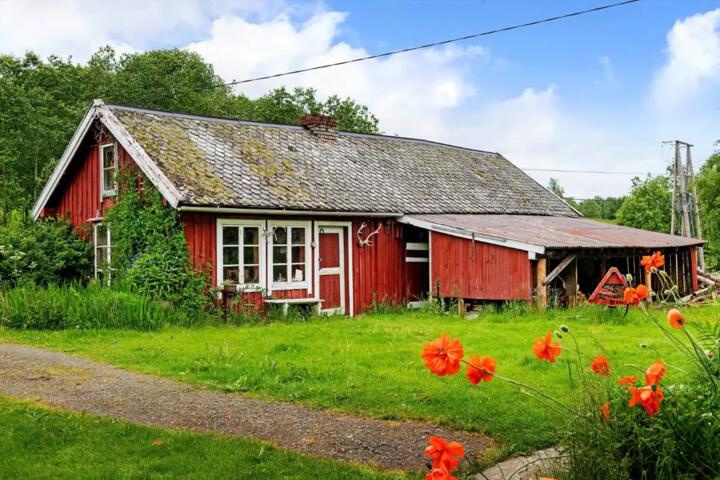
A country house offers total control, but you are the CEO, janitor, and structural engineer. You aren't just buying a home; you're buying a private utility system. From septic tank pumping to roof snow removal, every mechanical failure is a direct hit to your liquid savings. There is no management company to call at 3 AM when a pipe bursts in the basement.
Geographic Arbitrage Reality
Often, people move further out to get more "house for their dollar." However, the Texas A&M Real Estate Center notes that land appreciates while structures depreciate. A country house has more structure to maintain and more land to tax. If your commute increases by 30 miles daily, you are adding roughly $125,000 in vehicle TCO over a decade, effectively erasing the "savings" of a cheaper zip code.
Financial Blunders
The most frequent mistake buyers make is calculating affordability based solely on the PITI (Principal, Interest, Taxes, and Insurance) formula. This legacy banking model fails to account for the "Big Three" of suburban ownership: mechanical systems, exterior envelope maintenance, and transit costs. When these are ignored, homeowners often find themselves "house rich and cash poor," unable to fund retirement accounts because the HVAC system failed.
Another pitfall is underestimating the "Special Assessment" risk in city condos. While monthly fees seem fixed, aging infrastructure in buildings older than 20 years can lead to five-figure "one-time" charges for balcony repairs or facade waterproofing. We saw this starkly in the aftermath of the Surfside collapse, where insurance premiums for Florida high-rises spiked by 40% to 100% in a single year.
Finally, there is the "Lifestyle Inflation" trap. A larger country house requires more furniture, more cleaning, more lighting, and more heating. Moving from a 1,200 sq. ft. condo to a 3,500 sq. ft. house doesn't just triple your space; it can quadruple your utility footprint due to inefficient volume heating and poor insulation common in older rural builds.
Optimization Tactics
To master TCO, you must treat your home as an asset with a lifecycle. For country houses, the most effective strategy is Preventative Mechanical Scheduling. Instead of waiting for a furnace to die in January, use services like HomeAdvisor or Angi to vet contractors for annual audits. Spending $300 a year on a professional inspection can extend a $10,000 system's life by five to seven years.
Smart Energy Retrofitting
For houses, energy is the largest recurring variable cost. Installing a Google Nest or Ecobee thermostat is a basic start, but the real ROI lies in "building envelope" integrity. Professional spray-foam insulation in the attic can reduce TCO by $400–$800 annually. Over a 15-year mortgage, that is over $10,000 in pure savings that increases the resale value of the home.
Analyzing Condo Reserves
Before buying a condo, ignore the gym and look at the Reserve Study. This document tells you how much cash the building has for future repairs. A "fully funded" reserve means the TCO stays flat. A "poorly funded" reserve (under 30%) is a ticking financial time bomb. Use tools like TopHap to visualize historical price trends and neighborhood-level tax hikes that could impact your monthly carry.
The Transportation Audit
If you choose the country house, you must account for the IRS Standard Mileage Rate (currently $0.67 per mile). If you drive 15,000 miles a year for errands and work, your "hidden" TCO is $10,050. Switching to an EV like a Tesla Model 3 or Rivian can slash fuel and maintenance by 50%, making the country house more viable. In the city, leveraging Uber or Zipcar instead of owning a permanent parking spot (which can cost $50,000 to buy or $400/mo to rent) can save you nearly $5,000 annually.
Tax Strategy and Deductions
Ownership structures matter. In the US, the SALT (State and Local Tax) deduction limit of $10,000 often hits suburban homeowners harder than condo dwellers. However, country houses often qualify for agricultural or conservation easements if the plot is large enough. Consult with a tax professional to see if "rewilding" part of your land can shave 20% off your property tax bill.
TCO Comparisons
Let's look at a 10-year horizon for two mid-career professionals in the Chicago area. Subject A bought a $600,000 condo in the Loop. Subject B bought a $600,000 house in Naperville. While their mortgages were identical, Subject A spent $1,200/month on HOA fees. Subject B spent $0 on HOA but $800/month on landscaping, snow removal, and a new roof in year seven.
By year ten, Subject A’s TCO was higher on paper due to fixed fees, totaling $144,000 in non-equity expenses. However, Subject B spent $110,000 on maintenance and an additional $95,000 on commuting and gas. The "cheaper" suburban life actually cost $61,000 more over the decade when including the vehicle lifecycle and private services. This illustrates why "free" land isn't actually free.
In another case, a family in Austin, Texas, opted for a modern condo specifically to avoid the "Tree Tax"—the high cost of maintaining old-growth oaks and irrigation in the Texas heat. By utilizing the building's Peloton-equipped gym instead of a private $100/mo club membership and avoiding a $500/mo pool service, they redirected $7,200 annually into an S&P 500 index fund, resulting in $110,000 of additional wealth over 10 years compared to their previous suburban lifestyle.
Cost Comparison
| Expense Category | City Condo (High-Rise) | Country House (Detached) | TCO Winner |
|---|---|---|---|
| Maintenance | Low (Included in HOA) | High (1-3% of value) | Condo |
| Utilities | Shared Efficiency (Lower) | Standalone (Higher) | Condo |
| Transportation | Walking/Public Transit | Vehicle Dependent | Condo |
| Predictability | High (Fixed Fees) | Low (Variable Repairs) | Condo |
| Appreciation Pot. | Moderate (Market Driven) | High (Land Scarcity) | House |
| Control | Low (Board Approval) | High (Total Autonomy) | House |
Avoiding Expensive Traps
One of the costliest errors in country living is "over-improving" for the neighborhood. Installing a $100,000 infinity pool in a $500,000 neighborhood rarely yields a 1:1 return on investment. Your TCO goes up due to maintenance and insurance, but your equity remains stagnant. Always check Remodeling Magazine’s Cost vs. Value Report before starting a project.
In the city, the "Luxury Amenity Trap" is the primary drain. Buildings with rooftop pools, 24-hour doormen, and dog-washing stations have significantly higher HOAs. If you don't use the humidor or the wine cellar, you are subsidizing your neighbors' lifestyles. Choose a "boutique" building with fewer staff to keep long-term TCO manageable.
For both types of properties, failing to contest property tax assessments is a "silent" cost. In many jurisdictions, you can hire a professional to appeal your tax valuation. This service usually takes a percentage of the savings, meaning there is no out-of-pocket cost to potentially lower your TCO by thousands over several years.
FAQ
Is a condo always cheaper than a house?
Not necessarily. In high-end markets like Manhattan or Miami, condo fees can exceed $3,000 a month, which may surpass the maintenance costs of a modest suburban home. You must calculate the "price per square foot" of the fees themselves.
How do I estimate house maintenance?
The "Square Foot Rule" is effective: allocate $1 per square foot per year for maintenance. A 3,000 sq. ft. house should have a $3,000 annual "sinking fund" for future repairs to avoid debt when systems fail.
Do solar panels reduce TCO for houses?
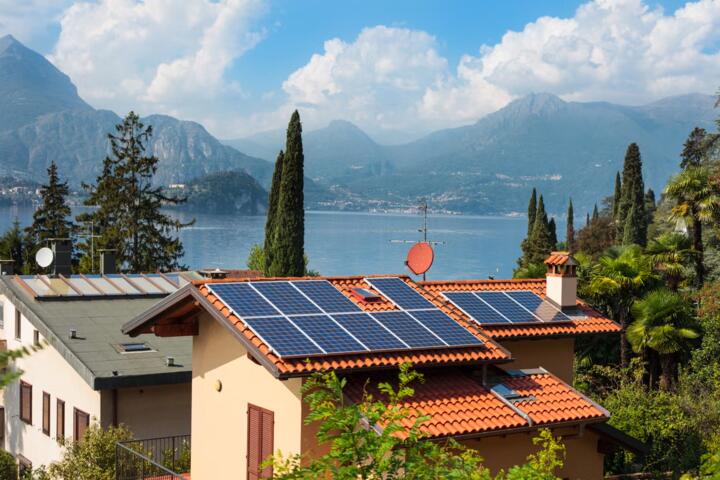
Yes, but the "payback period" is key. Using a service like EnergySage to compare quotes, most homeowners see a TCO break-even point at 7 to 9 years. If you plan to move sooner, the TCO may actually increase due to installation debt.
What is a Special Assessment?
This is a one-time fee levied by a condo board for major repairs not covered by the reserve fund. It is the most significant "hidden" risk in condo ownership and can range from $5,000 to $100,000 per unit.
Does land size affect TCO?
Massively. Larger plots require more fencing, landscaping, drainage management, and higher property taxes. If the land isn't producing income or providing significant utility, it is a net liability in a TCO calculation.
Author’s Insight
I have owned both a glass-walled condo in a Tier-1 city and a sprawling five-acre estate. What I’ve learned is that the house doesn't just take your money; it takes your time, which is a hidden currency of TCO. I spent an average of 6 hours a week on "property management" in the country house—time I could have billed at my professional rate. When you calculate TCO, don't just look at the bank statement; look at your calendar. For most high-earners, the "all-in" simplicity of a managed condo often results in higher net wealth because it frees up time for professional growth or high-value investments.
Summary
The choice between a country house and a city condo is a trade-off between control and convenience. To minize your Total Cost of Ownership, you must look beyond the mortgage and analyze the "Big Three": maintenance, transportation, and energy. For houses, focus on preventative mechanical care and energy efficiency. For condos, scrutinize the reserve fund and amenity utility. By treating your primary residence as a managed asset rather than a passive shelter, you can save six figures over the life of your ownership. Before signing a contract, run a 10-year projection that includes vehicle depreciation and a 2% annual inflation rate on service fees.