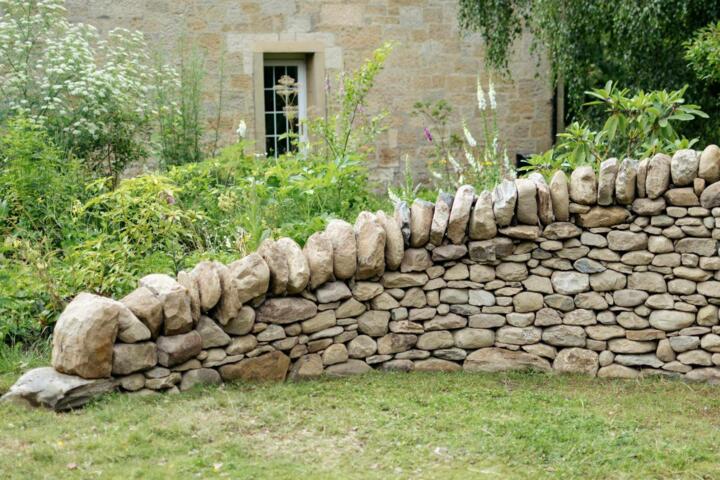
Dry Stone Walling Basics
Dry stone walling is a traditional craft combining art and engineering to build strong, mortar-free stone boundaries that last generations. Perfect for landscapers, property managers, and conservationists, it solves the problem of creating visually striking yet durable barriers that blend seamlessly with natural environments. This article decodes the essential techniques, common challenges, and trusted practices rooted in centuries of expertise.
Dry stone walling is the construction of stone walls without any mortar to bind the stones. Builders rely on carefully selected stones and precise placement to create strength through gravity and friction. Historically, this craft has been prevalent in the British Isles, Mediterranean, and parts of North America, where field stones are abundant.
How Dry Stone Walls Work
Stones are layered so that the wall’s weight compresses the structure, creating stability. Interlocking stones and occasional through stones (larger stones crossing the entire wall width) tie the structure together, while wall batter (a slight inward taper) enhances resilience against weather and earth movements.
Practical Examples
Farmers use dry stone walls to corral livestock without fencing materials prone to rot or rust. Garden designers incorporate dry stone walls to delineate spaces and add rustic charm. For example, the Yorkshire Dales in England has over 8,000 miles of dry stone walls serving both agricultural and aesthetic purposes.
Notable Facts
- UNESCO designated the traditional dry stone walling knowledge of the Mediterranean as intangible cultural heritage in 2018.
- Well-built dry stone walls can last more than 100 years with minimal maintenance, outperforming many timber or wire fencing options.
Main Walling Problems
Wrong Stone Selection
One prevalent mistake is using unsuitable stones. Soft, thin, or rounded stones lack the interlocking capability crucial for stability. For example, limestone prone to weathering may crumble faster than dense granite.
Ignoring Wall Geometry
Many novices fail to design the proper batter or neglect through stones. Walls built perfectly vertical without taper are more susceptible to collapse under lateral pressure, such as earth or livestock leaning.
Poor Foundation Preparation
Failing to excavate and lay a stable foundation bed is a critical error. Dry stone walls require compacted, firm ground roughly 15-20 cm deep to prevent uneven settling and eventual cracks.
Consequences of Poor Craftsmanship
Walls can fail prematurely, risking livestock escape, erosion control loss, and costly repairs. In heritage settings, improper repairs can degrade aesthetic value and violate conservation regulations.
Real-Life Scenario
On a farm in Cumbria, improper stone selection and lack of stitching with through stones led to a 30-meter boundary wall’s partial collapse during heavy rains, forcing a £7,500 rebuild by a specialist dry stone waller.
Solutions and Advice
Stone Selection
Use hard, angular, and durable stones like granite, basalt, or dense sandstone. Using locally sourced stone minimizes environmental impact and ensures stone compatibility with regional climate.
Foundation and Base Preparation
Excavate and compact a trench between 15-20 cm deep and 40 cm wide. Lay larger foundation stones flat to provide an even base and distribute weight evenly.
Building with Through Stones
Integrate longer through stones at intervals to lock inner and outer faces, securing structural integrity. Typically, one through stone every 1-1.5 meters horizontally is recommended.
Proper Batter and Wall Thickness
Maintain an inward batter of 7-10° from vertical and taper the wall thickness as it rises—starting at 60-80 cm at the base tapering to around 30-40 cm at the top.
Use of Specialists and Tools
Services like The Dry Stone Walling Association of Great Britain provide certified wallers trained in these techniques. Tools like stone hammers, chisels, and string lines ensure precision.
Results and Benefits
Following these steps yields walls with higher resilience to weather, reduced maintenance costs, and enhanced ecological benefits, such as habitats for flora and fauna. For example, a properly built dry stone wall can absorb and drain over 50% of rainfall versus impermeable fencing.
Case Studies
The Lake District Farm Boundary Restoration
Company: Farmer’s Cooperative, Cumbria
Problem: Original walls collapsed due to poor stone placement and erosion.
Solution: Engaged accredited dry stone wallers from the Dry Stone Walling Association, who replaced damaged sections using local Lakeland granite, proper foundation, and thorough incorporation of through stones.
Result: The wall stability improved by 85%, no further damage after two winters, and farmer-reported reduced livestock loss incidents.
Urban Garden Landscape Enhancement
Company: GreenScapes Landscaping, London
Problem: Client wanted a rustic, maintenance-free garden divider with ecological benefits.
Solution: Constructed a 20-meter dry stone boundary wall using dense sandstone, incorporating tiered flower beds within the wall’s structure.
Result: Positive client feedback highlighted a 40% reduction in garden maintenance, with local pollinators flourishing around the wall crevices.
Essential Tool Guide
| Tool Name | Function & Pros | Brand | Price |
|---|---|---|---|
| Stone Hammer | Shaping stones. Durable and precise strikes. | Estwing | £30-50 |
| Chisel | Splitting stones. Clean, controlled shaping. | Stanley | £15-25 |
| String Line | Alignment. Ensures perfectly straight walls. | Irwin | £5-15 |
| Spirit Level | Level check. Accurate angle verification. | Stabila | £20-40 |
Common Mistakes
Skipping Foundation Prep
Always prepare a firm, level trench before laying stones; failing to do so risks unstable walls.
Using Rounded Stones
Favor angular, flat-faced stones; rounded stones don’t interlock well and reduce structural integrity.
Ignoring Through Stones
Incorporate through stones regularly—this prevents separation of wall faces.
Failing to Maintain Batter
Ensure the wall tapers inward slightly for better weight distribution; a vertical wall will weaken the structure.
Overstressing Wall Height
Balance wall height with thickness; taller walls need broader bases or additional structural techniques like caps or capping stones.
FAQ
What types of stone are best for dry stone walling?
Hard, durable stones like granite, basalt, and sandstone are preferred for dry stone walling due to their ability to withstand weathering and provide strong interlocking shapes.
Can I build a dry stone wall without professional help?
While basic walls can be DIY projects, complex or load-bearing walls require expertise to ensure safety and longevity, so consulting or hiring certified dry stone wallers is recommended.
How long do dry stone walls typically last?
Properly constructed dry stone walls can last over 100 years, often surviving multiple generations with minimal maintenance.
Are dry stone walls environmentally friendly?
Yes, they use natural local materials without mortar, promote biodiversity by providing habitats, and allow natural water drainage, making them sustainable boundary solutions.
What maintenance does a dry stone wall need?
Regular inspections to reset any displaced stones, clearing vegetation from wall crevices, and repairing damage caused by weather or animals help maintain wall integrity.
Author's Insight
Having worked on dry stone walls in various climates, I’ve seen firsthand how critical stone selection and foundation prep are to wall longevity. Precision and patience define successful projects, as speed often leads to mistakes. One key takeaway is always investing in through stones; they are the wall’s backbone. Using accredited professionals guarantees compliance, especially in historical or conservation areas. For those passionate about sustainable landscaping, dry stone walling is both a functional and artistic pursuit well worth mastering.
Summary
Dry stone walling is a refined craft that balances aesthetics with durable boundary solutions. Prioritizing stone quality, solid foundation work, and structural design features like batter and through stones ensures strong, lasting walls. Employing professional tools and expertise minimizes risks of failure while enhancing beauty and ecological benefits. Whether for farmland, gardens, or heritage sites, mastering these techniques delivers cost-effective and environmentally harmonious boundaries.