Eco-Logical Landscaping
Modern landscaping is shifting from "controlling nature" to "integrating with nature." In practice, this means replacing the standard Kentucky Bluegrass—which requires roughly 1 inch of water per week—with species that have evolved to survive on your specific local rainfall patterns. For an owner in the American Southwest, this might mean replacing a thirsty lawn with Agave americana or Muhlenbergia capillaris.
Real-world data shows the impact is immediate. According to the Environmental Protection Agency (EPA), outdoor water use accounts for nearly 30% of total household water use, but in dry climates, that number climbs to 60%. By switching to regional vegetation, you effectively decouple your property's beauty from the municipal water grid.
Consider a typical suburban lot in Arizona. A traditional grass lawn requires about 55 gallons of water per square foot annually. A desert-adapted landscape requires only 15 gallons. For a 2,000-square-foot yard, that is a saving of 80,000 gallons of water every single year.
Habitat Crises
The primary mistake in modern development is the "monoculture trap." We treat every climate—from the humid Southeast to the arid West—as if it should look like an English manor. This leads to massive over-irrigation and the heavy use of synthetic fertilizers like Scotts Turf Builder to keep non-native species alive in hostile environments.
When you plant species that aren't meant for your soil, they lack natural defenses. This forces a cycle of chemical intervention. Runoff from these chemicals enters local watersheds, causing algal blooms and damaging aquatic life. Furthermore, traditional lawns act as "biological deserts," offering zero sustenance for local pollinators like the Monarch butterfly or Mason bees.
In regions like California, the consequences are even more dire. Continued use of non-native, high-fuel plants in fire-prone areas increases property risk. Native plants like Ceanothus often have higher moisture retention in their leaves, acting as a natural buffer compared to dried-out, invasive grasses.
Strategic Plant Choices
Root Depth and Soil Structure
Native plants are engineering marvels below the surface. While turf grass roots rarely extend beyond 4 inches, native prairie plants like Andropogon gerardii (Big Bluestem) can reach depths of 10 feet. This allows them to tap into deep groundwater reserves during droughts. Use tools like the USDA Plant Hardiness Zone Map to identify exactly which species are deep-rooted for your specific zip code.
The Microclimatology Factor
Don't just plant by zone; plant by the specific light and moisture pockets of your yard. Use a SunCalc tool to track shadows. North-facing walls are perfect for shade-loving natives like Polystichum munitum (Western Sword Fern), which retain soil moisture far better than exposed grass. This "right plant, right place" methodology eliminates the need for supplemental sprinklers after the first year.
Smart Irrigation Integration
Even native plants need help getting established. Replace traditional spray heads with Rain Bird drip irrigation systems or Hunter Industries MP Rotators. These deliver water directly to the root zone at a slower rate, reducing evaporation loss by nearly 40%. During the 12-month establishment phase, use a smart controller like Rachio 3, which adjusts watering schedules based on hyper-local weather forecasts.
Pollinator Corridors and Value
A bio-diverse yard isn't just about saving water; it's about property value. Research from the National Association of Realtors suggests that high-quality, sustainable landscaping can add 7% to 15% to a home's value. By planting Asclepias (Milkweed) or Echinacea, you create a "certified wildlife habitat" through the National Wildlife Federation, a credential that appeals to modern, eco-conscious buyers.
Soil Amendment and Mulching
Stop bagging your leaves. In a native system, "leaf litter" is gold. Using organic mulch, such as Cedar Bark or Pine Straw, regulates soil temperature and prevents the top layer from baking. This retains an additional 20% of soil moisture. In heavy clay soils, incorporating organic compost before planting improves aeration, allowing roots to penetrate deeper and access hidden water stores.
Success in the Field
A commercial office park in Austin, Texas, faced $12,000 annual water bills for its 3-acre St. Augustine grass perimeter. In 2023, they partnered with a local ecological design firm to "rewild" the area. They removed the turf and installed a mix of Black-eyed Susans, Muhly grass, and Mexican Hat flowers. They also installed a Basement Watchdog rain barrel system to capture roof runoff.
The results were transformative. By the second year, the irrigation system was turned off entirely for 8 months of the year. The annual water bill dropped by 72%, and the property saw a 300% increase in observed local bird species. The ROI on the project was achieved in just 26 months through savings on water, mowing, and fertilizer.
In a residential case, a homeowner in Denver used the Resource Central "Garden in a Box" program to replace 500 square feet of lawn. By utilizing pre-planned xeric (low-water) kits, they reduced their summer peak water usage by 4,500 gallons per month. The homeowner reported that maintenance time dropped from 3 hours a week to just 20 minutes of light weeding per month.
Landscaping Efficiency
| Feature | Traditional Turf Lawn | Native Landscape |
|---|---|---|
| Weekly Watering | 1.0 - 1.5 inches | 0 - 0.25 inches (Established) |
| Mowing Frequency | Weekly (25-30 times/year) | Annual or Bi-annual pruning |
| Chemical Input | High (N-P-K Fertilizers) | None to Minimal |
| Pollinator Support | Near Zero | High (Bees, Butterflies, Birds) |
| Root Depth | 2-4 inches | 3-15 feet |
Avoiding Common Mistakes
The "Over-Watering" Reflex
The most common failure in native gardening is "killing with kindness." Native plants are adapted to cycles of dry weather. If you continue to water them like a lawn, you will cause root rot. Always check soil moisture 2 inches down with a Govee Soil Moisture Meter before adding water. If it’s damp, walk away.
Ignoring the Weeding Phase
During the first year, native beds look sparse. This is when invasive weeds like Crabgrass or Dandelions will try to take over. You must remain vigilant for the first 12 to 18 months. Once the native plants fill in, their dense root systems and foliage will naturally outcompete the weeds, but the initial labor is non-negotiable.
Poor Species Sourcing
Avoid buying "wildflower mixes" from big-box retailers. Often, these contain "naturalized" species that are actually invasive in your specific county. Always source your plants from specialized nurseries or use the National Wildlife Federation's Native Plant Finder to get a list of species truly indigenous to your ecoregion.
FAQ
How long does it take for native plants to be "water-independent"?
Generally, it takes one to two full growing seasons. During the first year, you water them to establish roots. By the third year, most native species can survive solely on natural rainfall, except during extreme, multi-week droughts.
Is native landscaping more expensive to install?
The upfront cost of plants (plugs or 1-gallon pots) can be higher than grass seed. However, when you factor in the elimination of weekly mowing, fertilizer, and the 50-70% reduction in water bills, the system usually pays for itself within 2 to 3 years.
Does it have to look "wild" and messy?
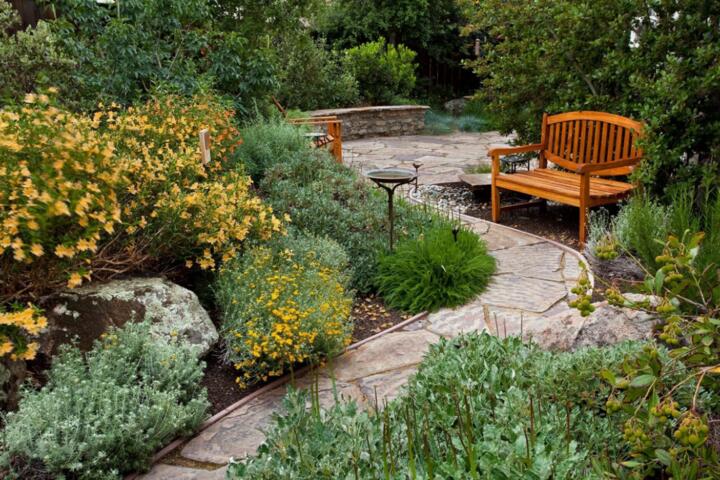
Not at all. "Cues to care"—like defined stone borders, mowed edges, and intentional grouping—create a manicured look. You can apply formal landscape design principles (symmetry, layering) using native species to maintain a high-end aesthetic.
Can I keep a small piece of lawn for my dog?
Absolutely. Many homeowners practice "hybrid landscaping," where they keep a small, functional circle of grass for pets or kids but surround it with deep native beds. This still significantly reduces the total water footprint of the property.
Do native plants attract unwanted pests or snakes?
They attract beneficial insects (predators) that actually keep pest populations like aphids and mosquitoes in check. While a more diverse garden may attract more wildlife, it creates a balanced ecosystem where no single species dominates.
Author’s Insight
In my fifteen years of ecological consulting, I have found that the biggest hurdle isn't the soil—it's the mindset. We are conditioned to love the "carpet look," but once you see a Redbud tree in full bloom or watch Goldfinches feeding on your dried coneflowers in winter, a flat green lawn starts to look incredibly boring. My best advice is to start small: pick a 10x10 foot section of your yard, kill the grass with cardboard (sheet mulching), and plant five local species. The ease of maintenance will convince you to do the rest of the yard by next season.
Summary
Transitioning to native landscaping is the most effective way to protect your local environment while shielding your wallet from rising utility costs. By focusing on deep-rooted species, utilizing smart irrigation tools like Rachio, and following a "right plant, right place" philosophy, you create a self-sustaining asset. Start by auditing your current water bill, identifying your USDA zone, and replacing just 20% of your lawn this year. The result is a more resilient, beautiful, and cost-effective property that works with nature rather than against it.