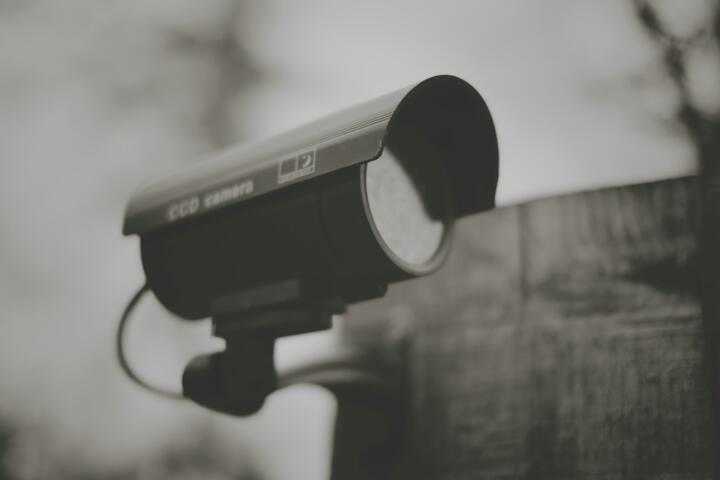
Remote Defense Logic
Remote security relies on the "Detect, Delay, and Deter" principle. Unlike urban systems that rely on immediate police response, remote systems must be highly autonomous. They require integrated solar arrays to keep batteries charged and cellular or satellite backhaul to send alerts to the owner. The goal is to create a "digital fence" that identifies a breach before the intruder reaches the core assets.
Modern remote security has shifted from reactive recording to proactive AI detection. Statistics from 2024 security industry reports indicate that AI-enabled human/vehicle filtering reduces "false positive" alerts by up to 90%, which is critical when every notification costs data bandwidth and battery life. A typical 4G-linked solar camera system today consumes roughly 5-10 Watts of power during peak operation, a feat of efficiency that was impossible a decade ago.
Remote Deployment Risks
The primary mistake made in remote installations is underestimating the "Power Budget." Beginners often buy standard plug-in cameras and try to run them off small portable power stations, only to find the system dead after two cloudy days. Without a calculated solar-to-battery ratio, the system is unreliable during winter months or storm cycles.
Connectivity is the second major pain point. Relying on consumer-grade Wi-Fi extenders over long distances leads to high latency and dropped frames. When a system fails to upload a clip during a critical event because the signal was blocked by heavy rain or foliage, the entire investment is rendered useless. Furthermore, using "white-light" motion sensors that are too sensitive results in light pollution and rapid battery drain due to wildlife movement.
Security Solutions
Deploying Solar-Powered Cellular Surveillance
In areas without Wi-Fi, Reolink Go Ultra or Arlo Go 2 are industry standards. These devices use 4G LTE/5G SIM cards to transmit data. For maximum reliability, professional installers use Starlink Mini for high-bandwidth backhaul in "dead zones." These systems should be paired with a minimum 60W solar panel and a 100Ah Deep Cycle LiFePO4 battery to ensure five days of "autonomy" (operation without sun).
Advanced Thermal and PIR Motion Filtering
Remote areas are full of moving trees and animals. Using standard pixel-based motion detection leads to thousands of useless clips. Instead, use Passive Infrared (PIR) sensors combined with Edge-AI. Brands like Hikvision and Dahua offer "AcuSense" technology that ignores swaying branches and only triggers the high-power transmitter when a human thermal signature is detected.
Implementing Long-Range Wireless Point-to-Point (PtP) Bridges
If you have power at a central house but need cameras 2 miles away, do not use cellular. Use a Ubiquiti airMAX or MikroTik wireless bridge. These devices create a "virtual fiber optic cable" through the air. This allows you to stream 4K video from the perimeter back to a central NVR (Network Video Recorder) without monthly data fees, provided you have a clear Line of Sight (LoS).
Low-Draw LED Perimeter Illumination
Lighting in remote areas should be "Dark Sky" compliant and highly efficient. Use Cree LED solar streetlights with programmable dimming. A smart setup keeps the light at 10% brightness for navigation and ramps to 100% (approx. 5000 lumens) only when the camera's AI detects a human. This "Shock Lighting" effect is a more powerful deterrent than constant light, as it signals to the intruder that they have been spotted.
Ruggedization and Vandal Resistance
Remote equipment is vulnerable to both weather and tampering. Use IK10-rated (vandal-resistant) dome cameras and IP67-rated enclosures. All cabling must be housed in EMT conduit or liquid-tight flexible tubing to prevent rodents from chewing the insulation—a common cause of system failure in rural environments.
Invisible Deterrence with 940nm Infrared
Standard security cameras use 850nm IR, which glows red at night. For "covert" remote security, utilize 940nm "No-Glow" IR illuminators. This makes the camera completely invisible to the human eye at night, preventing an intruder from simply shooting out the light source or avoiding the camera's field of view.
Active Deterrence and Two-Way Audio
Modern remote units like the Lorex Nocturnal series include built-in sirens and strobe lights. When a perimeter line is crossed, the system can automatically play a pre-recorded message: "You are trespassing on private property; the authorities have been notified." This immediate feedback often stops a crime before it begins.
Mini-Case Examples
Case Study 1: Commercial Timber Farm
A 500-acre timber yard suffered from equipment fuel theft. They installed four Sunba Illuminati solar PTZ (Pan-Tilt-Zoom) cameras linked via a Starlink terminal. They replaced 24/7 halogen lights with AI-triggered strobes. Result: Fuel theft dropped to zero in six months, and the system paid for itself by eliminating the need for a physical night watchman.
Case Study 2: Remote Construction Site
A developer used three VOSKER V300 cellular cameras to monitor a high-value build site. By using "Time-Lapse" mode combined with AI alerts, they managed data costs effectively. Result: They caught a delivery driver dumping unauthorized waste after hours, saving $4,000 in environmental cleanup fees through video evidence.
Security System Tools
| Component Type | Recommended Tool | Specs & Use Case |
|---|---|---|
| Cellular Camera | Reolink Go Series | Solar-powered. Best for areas with no Wi-Fi/Power. |
| Wireless Bridge | Ubiquiti NanoStation | POE powered. Long range (5km+) back to base. |
| AI Floodlight | Ring Solar Light | Solar powered. Smart deterrence for entrances. |
| Satellite Link | Starlink Mini | 12V-24V DC. For extreme/deep woods locations. |
Common Mistakes
Never use "Cloud-Only" cameras in remote areas. If your internet connection flickers (common with cellular/satellite), the camera will fail to record. Always ensure your hardware has an On-board Industrial Grade SD Card (like SanDisk Max Endurance) to act as a fail-safe. Regular SD cards will burn out within months due to the constant "write" cycles of security footage.
Another error is mounting cameras too high. While you get a better view, you lose the ability to identify faces. Aim for a mounting height of 8-10 feet, and use hidden junction boxes so an intruder cannot simply unplug the camera from the base. Finally, do not forget to treat your solar panels with hydrophobic coating to prevent dust and snow buildup from killing your power supply.
FAQ
How long does a solar camera battery last without sun?
Most professional-grade remote units are designed for 3 to 5 days of autonomy. If you expect longer storms, you must over-size your battery bank or lower the "frame rate" of the recording to save energy.
Will cellular cameras work in areas with 1 bar of signal?
Video requires high "upload" speeds. 1 bar may work for photos, but for video, you will likely need a Cellular Signal Booster (like weBoost) or a high-gain external Yagi antenna pointed at the nearest tower.
Do I need a subscription for these systems?
Cellular cameras require a monthly data plan (SIM card). However, Point-to-Point wireless systems and local SD card recording have zero monthly costs once the hardware is purchased.
Can thermal cameras see through heavy fog or smoke?
Yes. Thermal imaging (FLIR) is superior for remote perimeters because it detects heat, not light. It is highly effective for identifying intruders in complete darkness, fog, or through light brush where a standard camera would see nothing.
Is Starlink too power-hungry for a solar setup?
Standard Starlink dishes pull 50-75W, which is high for solar. However, the Starlink Mini pulls only 20-40W and can be powered directly by a 12V battery, making it a viable option for remote security hubs.
Author’s Insight
From my experience in the field, the most overlooked aspect of remote security isn't the camera—it's the signage. Legal "Video Surveillance" signs in high-visibility areas do 70% of the work in deterring casual trespassers. Technically, I always recommend a "Hybrid" approach: use local SD cards for 24/7 recording and cellular/satellite for AI-filtered "Event Alerts" only. This keeps your data bill low while ensuring you never miss a second of activity. My best advice? Build for the worst winter day, not the best summer day.
Summary
Securing a remote perimeter requires a move away from consumer-grade "plug-and-play" devices toward a rugged, power-conscious ecosystem. Start by auditing your power availability and signal strength, then select hardware that utilizes AI filtering to preserve those resources. By combining solar-powered 4G cameras with intelligent LED lighting and secure local storage, you create a resilient defense that operates reliably in the most demanding environments. The goal is total visibility, even when you are hundreds of miles away.