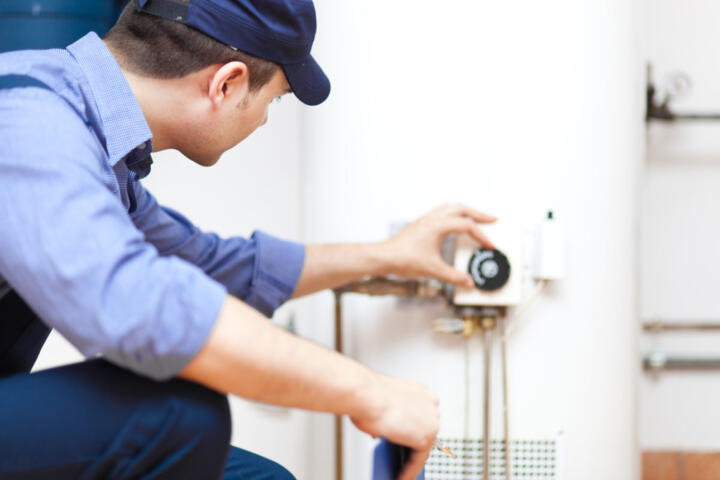
Tankless Vs Tank Basics
A tank water heater stores heated water in an insulated cylinder and cycles a burner or electric elements to replace heat losses. A tankless water heater heats water on demand as it flows through a heat exchanger, so it does not keep a large volume of hot water ready. That single design difference changes how hot water behaves during showers, laundry, and dishwashing.
Tank units typically deliver hot water at a steady temperature until the stored volume drops below the thermostat setting, then recovery begins. Tankless units deliver hot water only while flow is present, and the outlet temperature depends on incoming water temperature, gas or electric capacity, and how much hot water the household draws at once. In practical terms, a tankless heater can feel “instant,” but it can also throttle output when multiple fixtures run together.
Fuel type matters for both designs. Gas tankless models often have higher flow capacity than electric tankless models, while electric tank units may be simpler to install where gas lines are limited. Venting requirements also differ: tankless units commonly require dedicated venting sized for the appliance, and some models use power-vent or sealed-combustion setups.
Common Pain Points
People often compare tank and tankless units using the wrong numbers. Tank heaters are commonly discussed by tank size (for example, 40 or 50 gallons) and recovery rate, while tankless heaters are discussed by flow rate at a temperature rise (often expressed in gallons per minute, or GPM). If you compare a tankless unit’s GPM at a specific temperature rise to a tank unit’s stored volume without matching conditions, the comparison becomes misleading.
Another frequent issue is sizing for peak demand. A household rarely uses hot water at a single fixture rate; showers, washing machines, and dishwashers overlap. Tankless units can struggle when the combined flow exceeds what the heater can heat while maintaining the set temperature, which can lead to lower outlet temperature or cycling behavior (some models reduce output rather than “fail”).
Installation dependencies also drive performance. Tankless heaters depend on correct gas supply pressure, adequate venting, and proper condensate handling for condensing models. Tank heaters depend on correct thermostat settings, anode rod condition, sediment management, and safe pressure-relief valve installation. When these details are off, the unit may still run, yet hot-water performance and lifespan drop.
Maintenance expectations differ too. Tank heaters accumulate sediment, which can reduce heat transfer and increase energy use; many manufacturers recommend periodic flushing. Tankless units can accumulate scale in hard-water areas, and some owners need descaling intervals that depend on local water chemistry.
How To Choose And Size
Match Demand To Output
Start with a realistic hot-water “load” estimate. List fixtures and their approximate flow rates (showerheads, faucets, dishwasher, washing machine) and identify the most likely simultaneous use. For tankless heaters, compare the model’s rated GPM at your expected temperature rise. A mild winter inlet temperature and a cold winter inlet temperature can change the required temperature rise enough that the same heater delivers different results.
If you want a quick sanity check, measure your incoming water temperature at the coldest time of year and decide the target outlet temperature (many homes use around 120°F at the tap for safety). Then compare that temperature rise to the heater’s published rating. I’ve seen homeowners pick a tankless unit based on “max GPM” marketing numbers, then discover the rating assumes a specific inlet temperature and temperature rise.
Plan For Venting And Fuel
Confirm venting type and clearances before buying. Gas tankless units often require sealed combustion and specific vent materials, and some configurations use a concentric vent system. Electric tankless units require adequate electrical service; a common constraint is whether the home’s panel has the amperage for the heater’s rated draw. If the panel upgrade is not included in the quote, the project can stall.
For tank heaters, venting depends on whether the unit is gas or electric. Gas tank units need proper draft and vent sizing, while electric units avoid combustion venting but may still require electrical upgrades. In both cases, check local code requirements for the pressure-relief valve discharge location and drain piping.
Budget For Maintenance
Plan for maintenance tasks that match the design. Tank heaters typically benefit from periodic flushing to remove sediment; the interval depends on water hardness and manufacturer guidance. Tankless heaters may need scale management, sometimes via chemical descaling or flushing with a pump kit, especially where water is hard.
As a small practical aside: if you look at a tankless manual dated 2023 or 2024, you’ll often find a specific descaling interval tied to water hardness or flow hours. That detail matters because “annual” can be too frequent for soft water and too rare for hard water.
Account For Safety And Controls
Temperature control affects comfort and safety. Tank heaters use a thermostat that cycles the burner or elements; tankless units modulate output based on flow and temperature sensors. Both designs can deliver scalding temperatures if misadjusted, so verify the maximum outlet temperature setting and whether the unit includes anti-scald or mixing controls.
Also check whether the system includes a mixing valve at the point of use. Some homes add thermostatic mixing valves to protect occupants and reduce the risk of sudden temperature spikes at fixtures. If you have children, older adults, or anyone sensitive to temperature changes, mixing controls become more than a convenience.
Educational Case Examples
Scenario 1: Family of four with overlapping mornings. A household with two showers running at the same time plus a dishwasher cycle chooses a tankless unit rated for a single shower. During winter, the outlet temperature drops when both showers run, and one shower feels lukewarm. The fix is not “turn it up,” because higher setpoints can worsen scald risk; the household instead selects a higher-capacity tankless model sized for the combined flow at the winter temperature rise.
Scenario 2: Older home with sediment issues. A homeowner replaces a 10-year-old 50-gallon tank heater after noticing reduced hot-water duration and higher energy bills. The new tank unit includes a maintenance plan: periodic flushing and inspection of the anode rod. Hot-water recovery improves because sediment no longer insulates the heat exchanger surfaces, and the thermostat settings match the household’s typical usage.
Comparison Checklist
| Decision Factor | Tank Heater Tends To | Tankless Heater Tends To | What To Verify |
|---|---|---|---|
| Hot-water behavior | Stable until stored volume drops | Depends on flow and temperature rise | Simultaneous fixture use and winter inlet temp |
| Energy pattern | Heat loss from standby tank volume | Heats only when water flows | Usage schedule and insulation/pipe heat loss |
| Peak demand | Limited by tank size and recovery | Limited by maximum heating capacity | GPM rating at your temperature rise |
| Maintenance | Sediment flushing; anode rod checks | Scale/descaling in hard water | Local water hardness and manufacturer intervals |
| Installation constraints | Space for tank and venting | Gas/electrical capacity and venting design | Permit requirements and vent/pipe sizing |
Step-by-step sizing checklist:
- List fixtures and estimate simultaneous hot-water use (two showers plus laundry is a common peak).
- Measure or estimate cold inlet temperature for the coldest month.
- Choose a target outlet temperature at the tap (often around 120°F for safety).
- For tankless, compare published GPM at the matching temperature rise; for tank, compare tank size plus recovery rate.
- Confirm venting and fuel/electrical capacity before final selection.
- Ask for a maintenance plan aligned with water hardness and the manufacturer’s manual.
Common Mistakes To Avoid
One mistake is ignoring temperature rise. A tankless heater rated for a certain GPM at a specific inlet temperature can underperform when inlet water is colder, which changes the required heating output. Another mistake is assuming that “more hot water” means “higher setpoint.” Higher setpoints can increase scald risk and may worsen performance limits when capacity is already stretched.
Some installations skip system-level checks. For example, undersized gas lines or restrictive shutoff valves can reduce burner performance on gas tankless units. On tank heaters, poor drain piping for the pressure-relief valve can create code violations and safety hazards. These issues rarely show up in a showroom comparison.
People also overlook pipe insulation and recirculation. Long pipe runs can cool water before it reaches the fixture, making both tank and tankless systems feel weak. A recirculation loop can reduce wait time, but it adds energy use and requires correct controls; a poorly set timer or sensor can increase costs.
Finally, homeowners sometimes treat maintenance as optional. Sediment in tanks can reduce heat transfer, and scale in tankless units can reduce heat exchanger efficiency. When performance drops, the unit may still run, but the household experiences lower flow temperature and longer recovery.
FAQ
How Do I Size A Tankless Heater?
Use the heater’s published GPM rating at a temperature rise that matches your coldest inlet water and your desired outlet temperature. Add up likely simultaneous fixture flow rates and compare that combined demand to the model’s rating.
Do Tank Heaters Run Out Of Hot Water?
They can when the stored volume drops faster than the recovery rate can reheat it. Recovery depends on burner or element capacity, tank size, and how quickly the household draws hot water.
Which Type Uses Less Energy?
Energy use depends on usage patterns and standby losses. Tank heaters lose heat while idle; tankless units avoid standby losses but may require more energy during high flow or when inlet water is cold.
Can A Tankless Unit Handle Multiple Showers?
Some can, but only when the combined hot-water demand stays within the unit’s maximum heating capacity at your winter temperature rise. If demand exceeds capacity, outlet temperature drops or the unit limits output.
What Maintenance Do I Need For Each Type?
Tank heaters typically need periodic flushing to manage sediment and checks related to the anode rod. Tankless heaters often need scale management in hard-water areas, with intervals stated in the manufacturer’s manual.
Author's Insight
Tank and tankless water heaters differ in where they store energy: tanks store heated water, while tankless units store heat in the heat exchanger only while water flows. That design choice shifts the key sizing metric from tank volume to flow rate at a temperature rise. Real-world performance also depends on installation details such as venting, gas supply, electrical service, and pipe insulation.
Because published ratings assume specific inlet temperatures and draw conditions, the most reliable comparison comes from matching those assumptions to your home’s winter inlet temperature and likely simultaneous use. If you gather those inputs and compare them to manufacturer data, the decision becomes less about preference and more about fit.
Key Takeaways
- Tank heaters deliver steady hot water until stored volume drops; tankless heaters deliver hot water based on flow and temperature rise.
- Sizing requires matching the heater’s rating conditions to your coldest inlet water and likely simultaneous fixture use.
- Installation constraints—venting, gas/electrical capacity, and safety valves—often determine whether performance matches the spec sheet.
- Maintenance differs: sediment control for tanks and scale management for tankless units, guided by water hardness and manufacturer instructions.