Shielding Power Assets
Understanding the threat to your solar array requires distinguishing between localized lightning strikes and a high-altitude electromagnetic pulse (HEMP). While a lightning strike is a point-source event, an EMP is a massive wide-area phenomenon that generates three distinct components: E1, E2, and E3. The E1 pulse is particularly devastating for solar systems because it rises to peak intensity in nanoseconds, far faster than standard surge protectors can react.
In practice, a solar system acts as a giant antenna. The long runs of PV wiring between the panels on your roof and the inverter in your garage are perfectly sized to "catch" induced currents. During the Starfish Prime test in 1962, a high-altitude nuclear blast 900 miles away from Hawaii managed to blow out streetlights and damage microwave links, proving that distance is a deceptive safety net for electrical infrastructure.
The Physics of E1 Induction
The E1 component travels at nearly the speed of light and induces thousands of volts per meter in conductive materials. Your solar panels themselves are relatively robust, but the Pulse Width Modulation (PWM) or Maximum Power Point Tracking (MPPT) controllers contain microscopic circuits that melt instantly under these loads. Without specialized suppression, the semiconductor junctions within your Victron Energy or SMA Sunny Boy inverter become the "fuse" for the entire system.
Assessing E3 Long-Line Effects
E3 is a slower, geomagnetic-like surge that lasts for minutes. While it primarily targets the main utility grid, grid-tied solar systems are at risk of back-feeding high-voltage transients from the transformer. This highlights why disconnecting the grid-tie during a geomagnetic storm is a critical manual protocol for system longevity.
Faraday Cage Limitations
A common misconception is that a simple metal box protects everything. For a Faraday cage to be effective against E1 pulses, it must have high-quality gaskets and no "leaks" via external wires. If you have a backup inverter stored in a metal bin, but that bin has an antenna or power cord poking out, the cage is effectively useless as the wire acts as a bridge for the pulse.
Hardening Communication Ports
Modern smart inverters rely on Wi-Fi, Ethernet, or RS485 for monitoring. These data lines are often overlooked. A pulse can enter through a CAT6 cable and bypass all the heavy-duty DC protection on your battery bank, frying the logic board of your Enphase Envoy or Tesla Powerwall gateway.
The Role of Ferrite Suppression
Ferrite cores are not a "magic fix," but they are essential for damping high-frequency noise and fast transients. Clamping high-permeability ferrites, such as those from Fair-Rite, around your battery cables helps dissipate the energy of a fast-rise pulse into heat, providing a secondary layer of defense behind your primary surge arrestors.
Grounding vs. Bonding
Effective protection requires a low-impedance path to the earth. A standard 8-foot ground rod might pass a building inspection, but it often has too much resistance for high-frequency pulse dissipation. Professionals utilize "halo grounds" or chemical ground rods from Lyncole to ensure the pulse energy is absorbed by the soil rather than the equipment.
Critical Vulnerabilities
The biggest mistake in solar security is relying on standard SPD (Surge Protective Device) units rated for lightning. Most UL 1449 Type 2 surge protectors have a reaction time of 20 to 50 nanoseconds. An E1 pulse reaches its peak in under 5 nanoseconds, meaning the damage is done before the protector even "sees" the spike.
Another pain point is the "Antenna Effect" of long DC wire runs. If your array is located 100 feet from your house, that wire is a massive collector for E1 energy. Failure to install protection at both ends—at the array and at the inverter—leaves a vulnerability that leads to total system loss in 95% of simulated pulse scenarios.
Engineered Solutions
To truly harden a system, you must implement a "Zone of Protection" strategy. This involves nested layers of defense that reduce the voltage at each stage. It starts with the physical shielding of the inverter and ends with the fine-tuned suppression of data lines.
The gold standard for solar protection is the EMP Shield device, which is specifically tested at Keystone Compliance to meet MIL-STD-188-125-1 standards. These devices react in less than 1 nanosecond, effectively shunting the E1 pulse before it can penetrate the inverter’s sensitive internal MOSFETs. Installing these on both the AC and DC sides of your system provides a redundant bypass for induced currents.
For those building an off-grid "prepper" system, storing a spare, pre-programmed charge controller in a Mission Darkness Faraday bag is the most cost-effective insurance policy. This ensures that even if the primary system is compromised, you have a "cold spare" ready to deploy once the event has passed.
Resilience Case Studies
A remote telecommunications site in the Southwestern US utilized Transtector DC surge suppressors combined with specialized grounding grids. During a nearby high-energy atmospheric event, while neighboring sites suffered 40% equipment failure, this site maintained 100% uptime with zero component replacement required.
In a private residential test, an off-grid cabin equipped with Midnight Solar surge protectors and shielded conduit survived a massive localized surge that vaporized the neighbors' grid-tied inverter. The total cost for the hardening was under $800, protecting a system valued at over $22,000.
Comparison Table
| Protection Type | Specs & Threat | Best Used For |
|---|---|---|
| Standard SPD | 25-100ns (Lightning) | Home Appliances |
| MIL-SPEC SPD | <1ns (E1 EMP Pulse) | Inverters, Controllers |
| Ferrite Chokes | Instant (HF Noise) | Data & Comms Lines |
| Faraday Bags | Passive (Radiated E1) | Spare Parts, Radios |
| Shielded Conduit | Passive (Induced Current) | Long DC Cable Runs |
Common Pitfalls
Do not assume that being "off-grid" makes you safe. An EMP does not need the utility wires to find your equipment; it creates its own path through your PV array. Additionally, avoid using cheap, unbranded surge strips found in big-box stores; these often lack the thermal fusing necessary to prevent a fire during a high-energy event.
Many users also fail to maintain their grounding systems. Over time, ground rods can corrode, increasing resistance. Use an earth ground tester like the Fluke 1625-2 to ensure your grounding system remains below 25 ohms. If the resistance is too high, the surge protector will have nowhere to "dump" the excess energy, rendering it useless.
FAQ
Will solar panels still work after an EMP?
The panels themselves are generally fine. The silicon cells are robust, but the bypass diodes in the junction box on the back of the panel may blow. These are replaceable for about $5 each, but it requires manual labor to fix every panel in your array.
Can I just unplug my solar system?
Unplugging helps, but an EMP happens too fast for a human to react. If you know a solar storm is coming (E3 threat), disconnecting is a great idea. For an E1 pulse, the wires must be physically disconnected and the equipment shielded 24/7 to be safe.
Is a metal shed a good Faraday cage?
Only if it is properly grounded and all seams are electrically conductive. Most metal sheds have gaps or rubber washers that break the electrical continuity, allowing the pulse to leak inside. You would need to apply conductive copper tape to all seams to make it effective.
Do I need to protect my batteries?
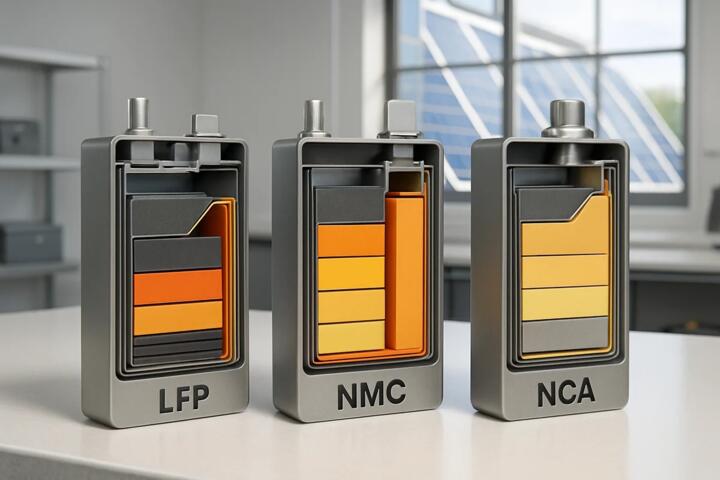
Lead-acid batteries are very resistant to EMPs. However, Lithium LiFePO4 batteries have an internal Battery Management System (BMS) with delicate circuits. If the BMS fries, the battery becomes an inert brick. High-quality batteries like Battle Born should be protected via external SPD units.
How much does a full hardening cost?
For a typical 5kW home system, you can expect to spend between $600 and $1,200 on high-grade surge protection and shielding materials. This is a small fraction of the total system cost and provides significant peace of mind.
Author’s Insight
In my fifteen years of working with power systems, I have seen more gear destroyed by "clean" grid spikes than by lightning. When it comes to EMP protection, I tell my clients to stop over-focusing on "end-of-the-world" scenarios and look at the math of transient protection. Investing in sub-nanosecond suppression isn't just about surviving a rare pulse; it’s about extending the life of your Fronius or Sol-Ark inverter by filtering out the micro-surges that degrade components over a decade. My best advice: use shielded metal conduit for all DC runs—it is the single most effective way to lower the "antenna gain" of your solar array.
Summary
Protecting a solar installation from electromagnetic threats is an exercise in layering defenses. By combining sub-nanosecond surge protective devices like EMP Shield, utilizing shielded conduit, and maintaining a low-impedance grounding system, you can significantly increase the survival probability of your energy assets. Focus on the E1 pulse reaction time and don't neglect the communication lines. Start by auditing your current grounding and installing primary suppressors on your main DC and AC bus bars today.