Tactile Renaissance
The movement toward "slow living" has transformed traditional crafts from niche hobbies into a multi-billion dollar global industry. According to the Craft Industry Alliance, the creative economy now contributes over $900 billion to the US GDP, with hand-built goods leading the premium sector. This shift is driven by a demand for "traceability"—knowing exactly who made an object and what materials were used.
Practically, this looks like a professional woodworker choosing black walnut sourced from sustainable urban forests rather than imported industrial lumber. In pottery, it is the shift from commercial glazes to "wild clay" harvesting, a process where artists dig their own material to achieve unique chemical reactions during firing. These practices aren't just aesthetic choices; they are rigorous technical workflows that require deep knowledge of physics and chemistry.
Mastering Woodworking Precision
Modern woodworking bridges the gap between 18th-century joinery and contemporary ergonomics. An expert maker focuses on wood movement—the inevitable expansion and contraction of fibers due to humidity. Using tools like the Lie-Nielsen No. 4 Bench Plane allows for surfaces so smooth they require no sanding, preserving the cellular structure of the wood for better finish absorption.
The Chemistry of Ceramic Firing
Pottery is as much about inorganic chemistry as it is about form. When using a Skutt KMT Electric Kiln, the artisan must calculate "heat work"—the combination of time and temperature represented by pyrometric cones. Achieving a "Reduction" atmosphere in a gas kiln involves starving the fire of oxygen, forcing it to pull molecules from the clay body, resulting in the deep celadons and oxbloods prized by collectors.
The Architecture of Hand Weaving
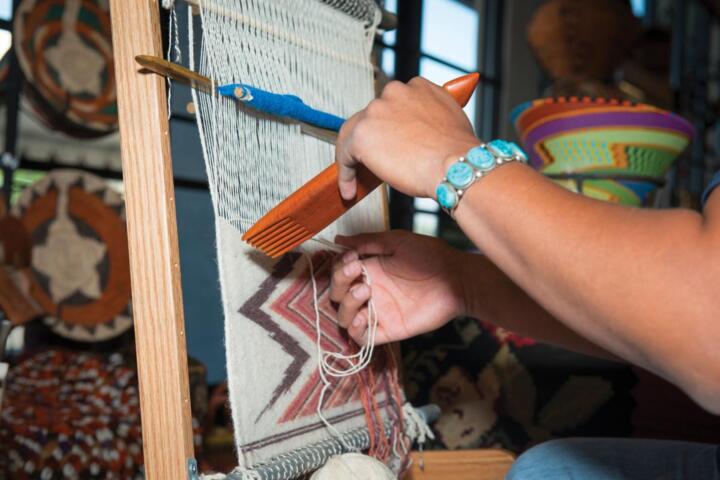
Weaving is the original binary language. A weaver setting up a Schacht Spindle Wolf Pup floor loom manages hundreds of individual warp threads, each representing a data point in a complex pattern. Professional weavers today are integrating high-end natural fibers like GOTS-certified organic linen and Peruvian alpaca, focusing on "drape" and "tensile strength" to create heirlooms that outlast synthetic fast-fashion by decades.
Sustainable Material Sourcing Strategy
The best practitioners utilize services like Bell Forest Products for specialty timber or The Ceramic Shop for raw frit and oxides. Sustainability isn't a buzzword here; it is a quality control metric. Using seasoned wood with a moisture content of exactly 6-8% prevents warping in finished furniture, while testing clay porosity ensures functional ware is food-safe and microwave-compatible.
Digital Integration for Artisans
While the craft is manual, the business is digital. Top-tier makers use Shopify integrated with Instagram Shopping to reach a global audience. Analytics show that "process videos"—showing the shavings coming off a chisel or the centering of a 5lb clay ball—increase conversion rates by 40% compared to static images. Consumers are buying the expertise and the story as much as the physical object.
Common Craft Pitfalls
The most frequent error in traditional crafts is "Gear Acquisition Syndrome" (GAS) without foundational skill. Beginners often spend thousands on a SawStop table saw or a Shimpo VL-Whisper wheel before understanding the physics of their medium. This leads to a reliance on machine power rather than grain direction or centrifugal force awareness.
Another critical failure is the "commodity trap." Many crafters undervalue their labor, pricing products based on mass-market retail prices rather than the Value-Based Pricing model. If a hand-woven scarf takes 15 hours to warp and weave, pricing it at $50 results in a net loss when overhead and materials are factored in. This lack of financial literacy leads to burnout and the eventual abandonment of the craft.
Technical negligence regarding safety is the third major issue. Fine dust from exotic woods like Cocobolo can be toxic, and silica dust in pottery studios can lead to silicosis. Professionals invest in HEPA filtration and M-Class respirators immediately, treating their workshop with the same rigor as a scientific laboratory.
Technical Frameworks
To move from amateur to expert, you must implement a "Systems-First" approach. In woodworking, this means adopting a Reference Surface methodology. Every project starts by flattening one face and one edge of a board perfectly square. Without this 90-degree foundation, every subsequent measurement will be inaccurate. Use a Starrett Combination Square—the industry standard for accuracy—to verify your references at every step.
In pottery, the recommendation is Weight Consistency Training. An expert potter can throw ten identical 12oz mugs with a variance of less than 5 grams. This is achieved by using a scale for every ball of clay and using "ribs" (shaping tools) to ensure consistent wall thickness. For those selling sets, Giffin Grip tools are essential for efficient trimming, reducing labor time by 60% while maintaining centering accuracy.
For weavers, the key is Warp Tension Management. Uneven tension across the loom leads to "tracking" errors and structural weaknesses. Using a "sectional warping" technique allows for much longer warps (up to 50 yards) with perfectly even distribution. This efficiency allows a weaver to produce a high volume of consistent fabric, making the craft economically viable.
Leverage Etsy’s Seller Handbook data to identify trends, but don't follow them blindly. Data suggests that "Customizable Hardwood Trays" and "Minimalist Stoneware" currently have the highest Search Volume to Competition ratio. However, the highest margins are found in bespoke, one-of-a-kind gallery pieces where the artist's "signature style" acts as a moat against competitors.
Success Stories
Case Study 1: The Bespoke Furniture Studio
A small workshop in Vermont shifted from general carpentry to high-end Mid-Century Modern furniture. By focusing exclusively on mortise-and-tenon joinery and hand-rubbed oil finishes (using Odie’s Oil), they increased their average order value from $800 to $4,500. They utilized Pinterest for lead generation, targeting interior designers rather than end-consumers. Result: A 12-month backlog of orders and a 300% increase in net profit within two years.
Case Study 2: The Production Pottery Hub
An artist in Oregon struggled with low margins on individual gallery pieces. They pivoted to a "Subscription Box" model for ceramic tableware. By optimizing their kiln firing schedule and using a proprietary glaze mix that only required a single "once-firing" (saving 40% on energy costs), they scaled to 500 monthly subscribers. Result: Stable monthly recurring revenue (MRR) of $15,000 and reduced waste by 15% through standardized forms.
Tool and Material Guide
| Craft Discipline | Essential Entry Tool | Professional Upgrade | Key Metric |
|---|---|---|---|
| Woodworking | Japanese Pull Saw | Festool Domino Joiner | Moisture Content (%) |
| Pottery | Manual Kickwheel | Brent CXC Electric Wheel | Shrinkage Rate (%) |
| Weaving | Rigid Heddle Loom | 8-Shaft Floor Loom | Ends Per Inch (EPI) |
| Finishing | Sandpaper (Poly) | HVLP Spray System | Micron Thickness |
Avoiding Roadblocks
Avoid the "Perfectionism Paradox." Many new makers never finish a project because they are afraid of making a mistake. In woodworking, a "mistake" is often just an opportunity for a decorative inlay. If a dovetail joint has a gap, don't scrap the project; use a "Dutchman" (a small wedge of matching wood) to fill it. This is how masters actually work.
In ceramics, the most common mistake is S-cracks in the bottom of plates. These occur due to uneven drying. To avoid this, compress the floor of the piece significantly during throwing and dry the work slowly under plastic for 7-10 days. Speed is the enemy of quality in traditional crafts; the material dictates the timeline, not the maker.
FAQ
Is woodworking expensive to start as a professional?
While high-end machinery is costly, a "hand-tool only" setup can be professional for under $1,500. Focus on a high-quality workbench, a set of Narex chisels, and a sharpening system like DMT Diamond Stones. Mastery of sharpening is more important than the price of the tool.
How do I know if my pottery is food-safe?
You must perform a "Lemon Test" and a "Microwave Test." Soak a glazed piece in lemon juice for 24 hours to check for acid leaching (color change), and microwave it for 2 minutes to ensure it doesn't get dangerously hot, which indicates moisture absorption in the clay body.
What is the most profitable item for a beginning weaver?
Hand-woven tea towels using 8/2 unmercerized cotton offer the best margin. They are relatively quick to warp, require no complex finishing, and are high-demand items in home decor boutiques where customers value "kitchen heirlooms."
Can I make a living from traditional crafts in 2026?
Yes, but you must be a "Full-Stack Artisan." This means being 50% maker and 50% marketer. Success requires a professional website, high-quality photography, and a presence on platforms like Wescover or 1stDibs to reach luxury buyers.
Does wood type really matter for furniture?
Absolutely. For structural integrity, hardwoods like White Oak or Hard Maple are essential. Softwoods like Pine are acceptable for rustic styles but lack the "Janka Hardness" required for high-traffic surfaces like dining tables or flooring.
Author’s Insight
Having spent over a decade at the workbench, I’ve learned that the greatest tool isn't a machine, but sensory acuity. You eventually learn to hear when a plane blade is dull or feel the exact moment clay is about to collapse on the wheel. My advice is to master one material deeply before diversifying. Don't just buy a tool because a video told you to; wait until the lack of that tool becomes the primary bottleneck in your production flow. True expertise is born from the constraints of your current setup.
Summary
Rediscovering woodworking, pottery, and weaving in a modern context requires a balance of ancient techniques and contemporary business strategy. By focusing on material science, investing in high-quality foundational tools, and avoiding common pricing mistakes, artisans can build sustainable and profitable careers. The path forward is simple: prioritize technical precision, document your process for the digital world, and never compromise on the structural integrity of your craft. Start by perfecting one single joint, one clay form, or one weave structure today.