Off-Grid Autonomy
Going off-grid is often romanticized as total freedom, but legally, it is a managed transition from public reliance to private infrastructure. In the United States, "off-grid" usually refers to a property that functions without a connection to the municipal electrical grid, water supply, or sewer system. However, the International Residential Code (IRC) and local zoning ordinances frequently mandate specific utility connections as a prerequisite for a Certificate of Occupancy (CO).
For example, in many jurisdictions across Florida and California, property owners have faced legal action not for the act of being off-grid, but for failing to meet "minimum standards of habitability." A famous case in Cape Coral, Florida, highlighted that while you can generate your own power, city ordinances may still require a connection to the local water utility if the infrastructure is available within a certain distance of the property line.
Statistically, over 180,000 families in the U.S. live off-grid, yet nearly 30% encounter zoning hurdles within the first two years of development. Understanding the difference between "by-right" land use and "conditional use permits" is the first step in avoiding expensive litigation or forced eviction from your own land.
Regulatory Hurdles
The most common mistake prospective homesteaders make is assuming that "unrestricted land" actually exists in a absolute sense. Even in rural areas, health department regulations regarding blackwater (sewage) management are non-negotiable. Installing an unpermitted composting toilet or a DIY greywater system can result in immediate "unfit for human habitation" notices, which supersede your deeded property rights.
Minimum Square Footage Mandates
Many local zoning boards enforce minimum house sizes, often ranging from 600 to 1,000 square feet. This creates a massive barrier for those looking to build "tiny homes" as their primary off-grid residence. In places like Sussex County, Delaware, strict foundations and size minimums are used to maintain property tax valuations, effectively outlawing mobile or ultra-small off-grid structures.
Mandatory Utility Hookups
In "Type A" residential zones, many municipalities require houses to be connected to the electrical grid to be considered legal dwellings. This is often tied to fire safety codes; if a smoke detector or HVAC system isn't powered by a "reliable" (meaning utility-provided) source, inspectors may refuse to sign off on the build, regardless of the size of your solar array.
Access and Road Frontage
Legal access is a silent killer of off-grid dreams. Some counties require "emergency vehicle access" which means a 20-foot wide gravel road with specific turn-around radii. If your remote plot is only accessible via a narrow dirt trail, you might be denied a building permit entirely, leaving you with land you can camp on but never legally build a home upon.
Water Rights and Collection
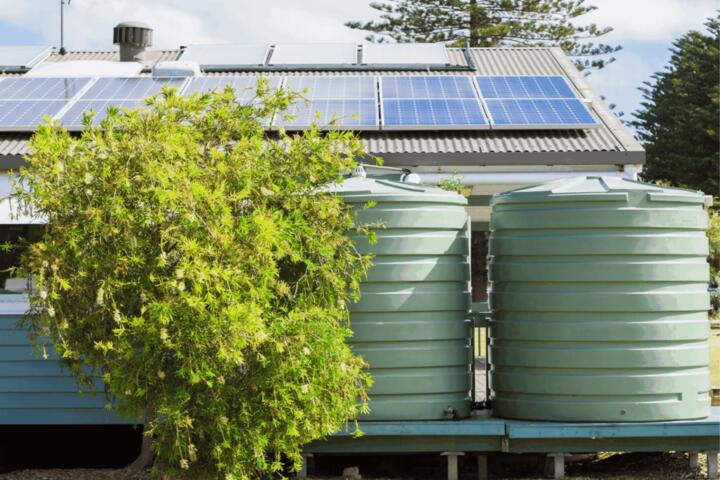
In the Western United States, specifically Colorado and Utah, rainwater harvesting is strictly regulated. Owning the land does not always mean you own the water falling on it. Using a rain barrel without a specific permit in certain basins can lead to heavy fines, as those water rights are often owned by downstream agricultural or municipal entities.
Waste Disposal Standards
The transition from a septic tank to an alternative system is a major friction point. While the "Humanure Handbook" methodology is popular in off-grid circles, most US counties only recognize NSF/ANSI 41 certified composting toilets. Using a non-certified DIY bucket system is one of the fastest ways to get a property condemned during a surprise health inspection.
Compliance Strategies
The key to successful off-grid living is not avoiding the law, but utilizing specific legal exemptions and modern technologies that meet or exceed code requirements. This involves a proactive relationship with the local Building Department and the use of engineered solutions that leave no room for inspector "discretion."
Utilizing Agricultural Zoning
Purchasing land zoned as "A-1" (Agricultural) or "RU" (Rural) often provides more flexibility than residential zoning. In many Texas counties, agricultural land allows for "accessory structures" that have fewer restrictions than primary dwellings. By establishing a small farm or timber operation, you can often justify off-grid infrastructure as necessary for "farm worker housing" or "utility sheds."
The "Unincorporated" Strategy
Targeting unincorporated areas—regions not governed by a specific city or town—is the gold standard for off-grid enthusiasts. In states like Missouri, Arkansas, and parts of Alaska, building codes are either non-existent or handled at a minimal state level. Using tools like LandWatch or Zillow to filter for "unincorporated" parcels can save thousands in permit fees and months of bureaucratic delays.
Engineered Solar Solutions
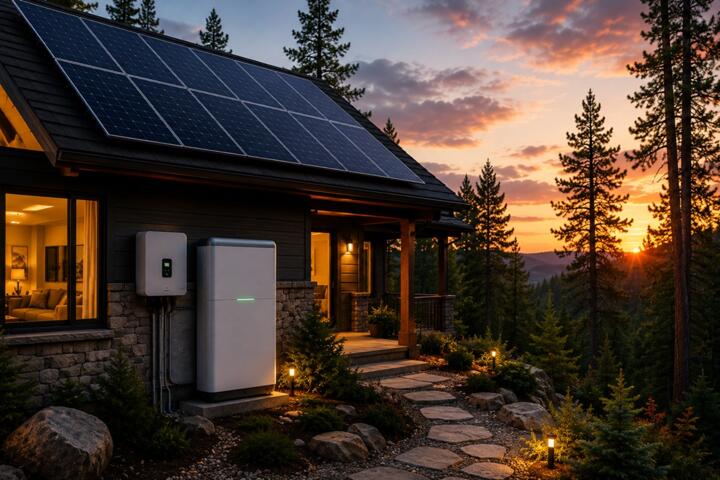
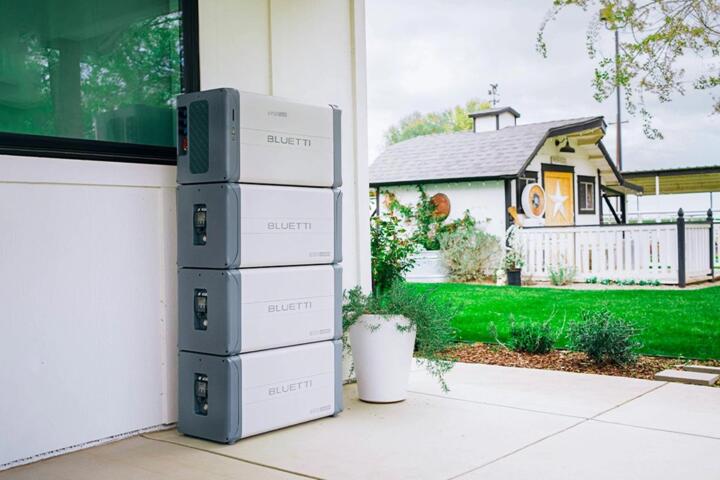
To bypass mandatory grid-tie laws, use UL-listed equipment like the Tesla Powerwall or Enphase IQ batteries. When you present a blueprint showing a system that meets NEC (National Electrical Code) standards, including rapid shutdown capabilities for firefighters, inspectors are much more likely to approve a "Stand-Alone Power System" (SAPS) permit.
Greywater and Septic Hybrids
Rather than fighting the health department over a composting toilet, install a "stub-out" for a standard septic system. This satisfies the legal requirement for a "sanitary means of waste disposal." You can then supplement this with legal greywater recycling systems (like those from Greyter) for irrigation, reducing your actual septic load while staying 100% compliant with the IRC.
Applying for Variances
If your plan conflicts with local code (e.g., a tiny house on a foundation), apply for a "Setback Variance" or a "Non-conforming Use Permit." This involves a public hearing where you demonstrate that your off-grid project doesn't negatively impact neighbors. Projects that emphasize "sustainability" and "high-quality materials" have a 40% higher approval rate than those framed as "low-cost" housing.
Real-World Examples
The following examples illustrate how careful planning and legal maneuvering can result in successful off-grid projects despite strict local environments.
Case Study 1: The High-Desert Homestead
A couple purchased 40 acres in Cochise County, Arizona. This county is famous for its "Owner-Builder Opt-Out" regulation. By filing a specific affidavit, they were exempt from most standard building inspections, provided they lived in the house themselves. They installed a 12kW solar array and a permitted well. By choosing a location with an existing "opt-out" clause, they saved approximately $15,000 in inspection and compliance costs.
Case Study 2: The Modern Eco-Cabin
An investor built an off-grid rental in the Catskills, New York. Local code required a grid connection. Instead of fighting it, they installed a "minimum service" 50-amp connection but never turned on the main breaker. They used a professional Victron Energy system for daily needs. Because the physical wire existed, they received their CO. The cost of the connection was $4,000, but it increased the property's resale value by 15% and satisfied all local safety ordinances.
System Comparison Guide
| Infrastructure Category | Standard Requirement | Off-Grid Alternative | Legal Compliance Difficulty |
|---|---|---|---|
| Electricity | Utility Grid Tie (NEC) | Solar/Wind + UL-Battery | Low (if using certified parts) |
| Potable Water | Municipal or Private Well | Rainwater Catchment | High (State-dependent) |
| Sewage | City Sewer or Septic | Composting (NSF-41) | Medium (Health Dept. oversight) |
| Heating/Cooling | HVAC (Minimum Temp) | Wood Stove / Heat Pump | Medium (Fire Marshal specs) |
| Access | Paved/Gravel Public Road | Private Easement | High (Title/Lien issues) |
Common Pitfalls
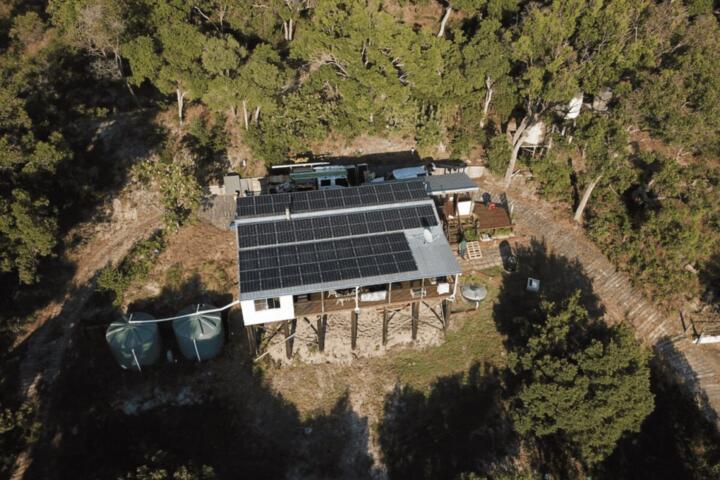
The "Don't Ask, Don't Tell" approach is the most dangerous strategy in off-grid living. With the prevalence of high-resolution satellite imagery (Google Earth) and drone-based tax assessments, unpermitted structures are easily identified. When the county discovers an unpermitted home, they often issue a "Stop Work" order or a demolition mandate, leaving the owner with no recourse.
Avoid buying land in "Homeowners Associations" (HOAs). Even if the county allows off-grid living, an HOA can legally forbid solar panels, clotheslines, or unconventional building materials. Always review the CC&Rs (Covenants, Conditions, and Restrictions) before closing on a property. Roughly 80% of modern subdivisions have restrictions that make true off-grid living impossible.
Never rely on "Grandfathered" verbal agreements. If a previous owner lived off-grid for 20 years, it doesn't mean you can. Zoning laws often reset or update upon the transfer of a deed. Always get a "Zoning Verification Letter" from the county planning department during your due diligence period to confirm the current legal status of the land's use.
FAQ
Is it illegal to live off the grid in the USA?
No, it is not federally illegal. However, specific actions required for off-grid living—like disconnected utilities or unapproved waste systems—may violate local municipal codes or health ordinances, making the dwelling "illegal" for occupancy.
Can I be forced to connect to city water?
Yes. Many cities have ordinances stating that if a water line runs within 100-200 feet of your property, you must connect and pay the monthly minimum fee, even if you have a functional well or rainwater system.
What state is easiest for off-grid living?
Missouri, Tennessee, and Texas are frequently cited as the easiest due to large areas with no building codes, lower property taxes, and favorable rainwater harvesting laws. Alaska remains the ultimate destination for zero-restriction living.
Are composting toilets actually legal?
They are legal if they carry the NSF/ANSI 41 certification. However, some local health departments still require a "back-up" traditional septic system to be installed on the property to protect the groundwater table.
How do I find land with no building codes?
Search for "unincorporated" areas in "open-code" counties. You can contact the county clerk and ask if they have adopted the International Residential Code (IRC). If they haven't, you are in a low-regulation zone.
Author’s Insight
In my fifteen years of consulting on rural land acquisitions, I have seen more dreams die due to "Title 24" or "Section 8" zoning violations than due to lack of money or hard work. The most successful off-grid residents I know are those who treat the building inspector as a partner rather than an enemy. My best advice is to spend the $500 on a professional "feasability study" before you buy land. Knowing that a parcel requires a $20,000 engineered septic system before you buy it allows you to negotiate the price or walk away. True freedom is built on a foundation of legal certainty, not just solar panels and batteries.
Summary
Navigating the legalities of off-grid living requires a strategic balance between self-sufficiency goals and municipal mandates. By focusing on unincorporated land, utilizing certified technology, and securing proper permits for waste and water, you can build a resilient home that stands the test of both time and law. Conduct thorough due diligence, respect local health codes, and prioritize professional engineering to ensure your off-grid lifestyle remains a permanent reality rather than a temporary experiment. Take the first step by contacting the planning department of your target county to request their specific "Schedule of Uses."