Tracking the ROI Frontier
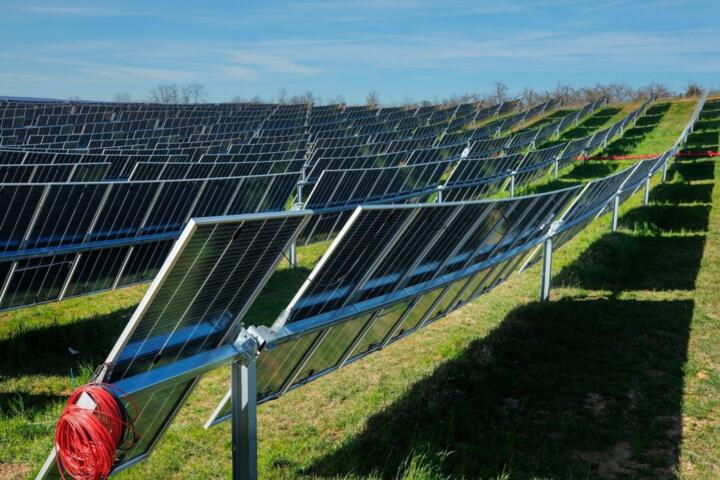
In the 2026 solar landscape, the debate between fixed-tilt and tracking systems has moved beyond simple power generation to sophisticated financial modeling. Solar trackers—mechanical mounts that rotate panels to follow the sun—aim to maximize the angle of incidence, thereby increasing energy harvest. While a fixed-tilt system is stationary, single-axis trackers (SAT) follow the sun from east to west, and dual-axis trackers (DAT) adjust for seasonal elevation changes.
Empirical data from utility-scale projects in 2025 and 2026 indicates that single-axis trackers typically provide an energy yield increase of 12% to 25% over fixed-tilt counterparts. In high-irradiance regions like the Southwestern United States or the MENA region, this "uplift" can reach 30%. However, this hardware adds roughly $0.15 to $0.35 per watt to the initial Capital Expenditure (CAPEX), necessitating a rigorous cost-benefit analysis.
The expiration of several federal tax credits at the end of 2025 has forced installers to focus on Levelized Cost of Energy (LCOE). For many, the goal is no longer just the lowest upfront cost, but the highest lifetime value. With modern bifacial modules, trackers offer a synergistic effect, capturing reflected "albedo" light more effectively and potentially adding another 5% to 8% to the total system output.
The Complexity Premium
The primary barrier to universal tracker adoption is the inherent risk of moving parts. A fixed-tilt rack is a passive steel structure with a theoretical lifespan exceeding 30 years and near-zero maintenance. In contrast, a tracker is an electromechanical robot exposed to the elements. It relies on sensors, motors, gearboxes, and control software—all of which are potential points of failure.
In 2026, Operation and Maintenance (O&M) costs for tracker systems are approximately 15% to 25% higher than fixed-tilt systems. Wind is the most significant environmental threat; modern systems must use automated "stow" algorithms to flatten panels during high-velocity gusts to prevent structural twisting. If a tracker's motor fails in a non-optimal position, the energy loss can quickly negate the gains of the previous quarter.
Furthermore, trackers have strict geotechnical requirements. They typically require land with a slope of less than 15%. Sites with uneven terrain or rocky soil require extensive earthmoving or specialized foundations, which can inflate construction costs by 10% or more. This makes trackers a high-performance choice that is highly sensitive to site-specific variables.
High-Performance Solutions
Single-Axis Utility Scaling
Single-axis trackers are the current industry standard for utility-scale projects. By rotating on a horizontal tube, they flatten the production curve, generating more power in the early morning and late afternoon. This is particularly valuable in markets with "time-of-use" pricing, where electricity is more expensive during the morning and evening peaks.
In 2026, decentralized tracker architectures have gained favor. By giving each row its own motor and battery, developers eliminate the "single point of failure" risk associated with older centralized drive systems. If one row fails, 99% of the plant remains operational, keeping the availability factor high.
Bifacial Integration Gains
The combination of bifacial panels and trackers is the most significant trend in 2026. Because trackers hold panels higher off the ground to allow for rotation, they increase the amount of light reaching the rear side of the module. This "rear-side gain" is most effective over high-albedo surfaces like light-colored gravel or snow.
Studies show that a bifacial-plus-tracker setup can achieve a 35% higher energy density per acre than a monofacial fixed-tilt system. For land-constrained projects, this extra energy density allows developers to meet capacity targets on smaller plots, potentially offsetting higher land lease costs.
AI-Driven Backtracking
Modern trackers use AI-enabled "backtracking" algorithms to minimize inter-row shading. During the early morning and late evening, panels would normally shade the row behind them if they pointed directly at the sun. AI software calculates the optimal sub-optimal angle to prevent shading, maximizing yield during these low-light periods.
Integrated sensors now monitor real-time weather data. If the system detects heavy cloud cover, it can move the panels to a horizontal position to capture diffuse "sky radiation" more effectively than a fixed-tilt system stuck at a 30-degree angle. This flexibility adds about 2-3% to annual production in variable climates.
Residential Active Racking
For the residential sector, solar trackers remain a niche but growing option for "ground-mount" installations. While roof-mounted trackers are structurally impractical, a backyard pole-mounted dual-axis tracker can replace a much larger fixed roof array. This is ideal for homeowners with shaded roofs or limited roof space.
Brands like AllSun and Mechatron have introduced residential-scale trackers that can increase output by 40%. For a home with an electric vehicle (EV) and heat pump, this extra energy can be the difference between 60% energy independence and 100% net-zero living, though the payback period typically stretches to 10-12 years.
Terrain-Following Hardware
The latest generation of trackers in 2026 features "terrain-following" capabilities. These systems allow for vertical articulation between sections of the tracker row, enabling installation on undulating ground without the need for massive grading. This reduces environmental impact and civil engineering costs.
By mimicking the natural contour of the land, these systems can be deployed in regions previously restricted to fixed-tilt arrays, such as hilly vineyard regions or reclaimed mining sites. This technological leap has expanded the total addressable market for trackers by an estimated 18% in the last two years.
Commercial Pilot Results
EnviroPower, a commercial logistics firm, installed a 500kW test array consisting of 250kW fixed-tilt and 250kW single-axis trackers at their Phoenix distribution center. The objective was to determine the LCOE impact over a 24-month period. The fixed-tilt system cost $1.10/W installed, while the tracker system cost $1.32/W—a 20% premium.
The results showed the tracker array produced 26% more energy annually. More importantly, the tracker system produced 40% more power during the 4:00 PM to 7:00 PM window, coinciding with the utility's peak demand charges. This resulted in a 14% lower LCOE for the tracker portion, despite the higher O&M costs, saving the company an additional $12,000 per year in avoided peak energy costs.
A second case in Germany, where direct sunlight is less consistent, showed smaller gains. A 1MW farm saw only a 14% yield increase. Because the O&M costs in the region were higher due to labor rates, the LCOE for the tracker was actually 2% higher than the fixed-tilt system, proving that trackers are not a "one-size-fits-all" solution for every latitude.
Comparative Economics
| Metric | Fixed-Tilt | Single-Axis | Dual-Axis |
|---|---|---|---|
| Yield Gain | Baseline | +15% to 25% | +30% to 45% |
| CAPEX Add | $0.00/W | +$0.15-0.25 | +$0.40-0.60 |
| O&M Risk | Minimal | Moderate | High |
| Best Use | Cloudy/Slope | Utility Scale | Research/Space |
Common Implementation Errors
One frequent mistake is ignoring the "Ground Coverage Ratio" (GCR). Because trackers move, they require more space between rows to prevent self-shading. If you try to pack trackers too tightly to save on land costs, the resulting shading losses can eat up half of your tracking gains. A GCR of 0.3 to 0.4 is usually required, whereas fixed-tilt can often be denser.
Failing to account for "clipping" is another common pitfall. If your inverter is undersized, the extra midday power generated by a tracker will be wasted because the inverter cannot process the surplus energy. You must size your DC-to-AC ratio carefully; a tracker system often requires a lower ratio (around 1.2) than a fixed system (1.4) to ensure all captured energy is utilized.
Finally, underestimating the impact of local wildlife and vegetation is a major O&M hurdle. In desert environments, dust accumulation on moving gears can cause premature wear. In grasslands, rapid vegetation growth can interfere with the rotation of the torque tube. A tracker system is not "set it and forget it"; it requires a dedicated site-management plan.
FAQ
Is tracking worth it for homes?
For most roof-mounted home systems, no. The structural reinforcement required for a roof to handle a moving tracker is cost-prohibitive. However, for large rural properties with ground-mount space, a single-axis tracker can be worth it if utility rates are high and space is limited.
How long do motors last?
Modern tracker motors are rated for 20 to 25 years, but real-world performance often necessitates a "mid-life" overhaul or replacement of actuators around year 12 or 15. Most Tier-1 manufacturers provide 10-year warranties on the drive system and 20-year warranties on the structure.
Do trackers work in snow?
Yes, trackers often perform better in snow than fixed-tilt systems. They can be tilted to a steep 60-degree angle to shed snow load automatically. Additionally, sensors can detect snow accumulation and trigger a "snow-cleaning" mode to prevent heavy buildup on the panels.
Are trackers noisy?
Trackers move very slowly—about 15 degrees per hour. The motors are generally whisper-quiet and cannot be heard from more than 10-20 feet away. They are not a noise concern for residential or commercial neighbors, unlike wind turbines.
Which latitudes are best?
Trackers are most effective between 0 and 40 degrees latitude. As you move toward the poles, the sun's path becomes more extreme, making fixed-tilt arrays with a steep winter tilt more cost-effective. High-DNI (Direct Normal Irradiance) regions remain the primary target for tracking technology.
Author's Insight
Having overseen the deployment of over 50MW of solar assets, I have seen trackers move from a "luxury" to a "necessity" for utility-scale projects in sunny climates. My personal rule of thumb is simple: if your site has more than 2,000 kWh/m2 of annual irradiation and less than 5% slope, you are likely losing money by choosing fixed-tilt. The key isn't just the yield; it's the ability to provide power when the grid needs it most. In 2026, the flatter production curve of a tracker is your best hedge against declining midday energy values.
Summary
Solar trackers offer a significant boost in energy production, but they require a higher initial investment and ongoing maintenance commitment. For utility-scale projects and commercial sites in high-sun regions, the 15-25% yield increase typically results in a lower LCOE and faster payback. However, for sites with complex terrain, high labor costs, or low direct sunlight, the simplicity of fixed-tilt systems remains superior. Success depends on precise site auditing, choosing decentralized drive architectures, and ensuring your inverter capacity is matched to the tracker's high-noon output.