Strategic Hydration
Managing over 500 gallons of water is not about "bottling" resources; it is about creating a closed-loop utility system. In a standard residential setting, the average person consumes about 1 gallon for drinking and 1-2 gallons for hygiene daily during emergencies. A 500-gallon setup, often utilizing a single vertical tank or a manifold of 55-gallon drums, represents 4,170 lbs of static weight. This requires a foundation—typically a 4-inch reinforced concrete pad—to prevent soil subsidence or structural collapse of the flooring.
Practitioners often use the "Rule of Three" for redundancy: one primary 500-gallon tank (like those from Norwesco), a secondary filtration layer (Berkey or Sawyer S3), and a final chemical treatment stage. In 2021, during the Texas freeze, households with these managed systems maintained full functionality while municipal lines burst, proving that local storage is the only true hedge against infrastructure fragility. Statistics show that 40% of emergency water is lost to leaks or contamination within the first 18 months if professional-grade seals are not used.
Common Failure Points
The most frequent error in large-scale storage is "set and forget" syndrome. Many enthusiasts fill a tank and assume it remains sterile indefinitely. Without a stabilizer, heterotrophic plate counts (HPC) can spike within months, turning a life-saving resource into a vector for waterborne illness. Biofilm buildup on the interior walls of tanks is a silent killer; once it forms, simple chlorine shock often fails to penetrate the protective slime layer.
Another critical failure is UV degradation. Storing translucent or white tanks in areas with indirect sunlight leads to rapid algae proliferation. Furthermore, using "food-grade" containers that previously held syrups or concentrates can be disastrous. Residual sugars act as a feast for bacteria, leading to fermentation and gas buildup. Real-world scenarios have shown that standard garden hoses, which contain lead and phthalates, can contaminate an entire 500-gallon batch during the initial fill-up.
Optimization Tactics
Selecting High-Density Polyethylene
For 500+ gallon capacities, look for tanks made from Food Grade High-Density Polyethylene (HDPE) that are BPA-free and UV-stabilized. Brands like Norwesco or Snyder Industries manufacture "Dark Green" or "Black" tanks. These opaque colors are non-negotiable because they block the light spectrum required for photosynthesis. A tank with a "Water Storage" rating is structurally reinforced to handle the lateral pressure of 2 tons of fluid without bowing.
Advanced Chemical Stabilization
To keep water fresh for 5+ years without rotation, use a stabilized oxygen or silver-ion treatment rather than standard bleach. Chlorine evaporates quickly, leaving the water unprotected. Products like Water Preserver (the first EPA-registered 5-year stabilizer) utilize a proprietary formula that kills bacteria, viruses, and cysts while preventing regrowth. For a 500-gallon tank, you would typically use two 2-ounce bottles of concentrate. This eliminates the need for the annual "drain and refill" cycle, saving 2,500 gallons of water over a five-year period.
Manifold and Plumbing Integrity
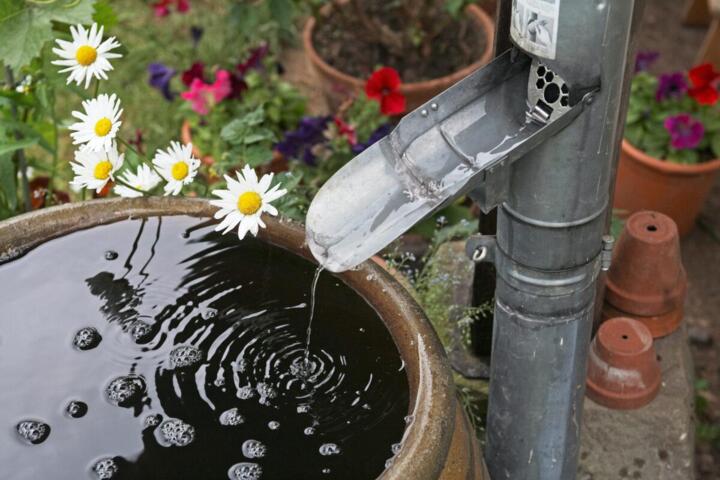
Connecting multiple 55-gallon drums is a popular way to reach the 500-gallon mark. Use a bottom-feed manifold system with 2-inch PVC or PEX piping. This ensures that when you draw water, you are pulling from the bottom where sediment might settle, and it allows for easier draining. Ensure all valves are lead-free brass or high-impact PVC. Using a "First Flush" diverter, similar to those used in rainwater harvesting, can prevent initial contaminants from entering the main reservoir during fill-up.
Filtration and Post-Storage Care
Even stabilized water can develop a "flat" taste due to lack of oxygen. Before consumption, run the water through a gravity-fed filter like the Berkey Light or a 0.1-micron Sawyer Point One Filter. This removes any residual heavy metals or microplastics that may have leached over years of storage. Incorporating an aeration step—simply pouring the water between two clean containers—restores the dissolved oxygen levels, making the water taste fresh and natural.
Site Prep and Loading
Never place a 500-gallon tank directly on a garage floor or wooden deck without calculating PSF (pounds per square foot). A 500-gallon tank exerts roughly 300-400 PSF depending on its footprint. Standard residential garage floors are often only 3.5 inches thick. It is advisable to use a 3/4-inch plywood buffer or a specialized tank stand to distribute weight evenly and prevent "point loading" which can crack the plastic or the concrete below.
Infrastructure Cases
Case Study 1: The Off-Grid Homestead (Arizona)
A small homestead in a drought-prone region installed a 1,000-gallon vertical HDPE tank. They initially used standard household bleach for treatment but found algae growth after 9 months due to a semi-translucent tank lid.
Action: They replaced the lid, painted the tank with UV-reflective paint, and switched to a silver-ion stabilizer.
Result: Lab tests 4 years later showed zero coliform bacteria and a pH of 7.2, maintaining total potability without a single water change.
Case Study 2: Urban Preparedness (Florida)
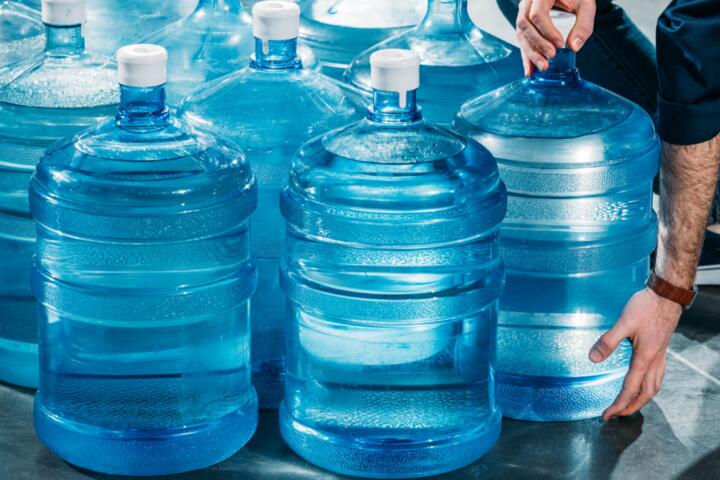
A residential complex implemented a manifold system of ten 55-gallon blue drums (550 gallons total) in a climate-controlled basement. They used food-grade NSF-61 certified hoses for filling.
Action: Installed a rotating schedule where 55 gallons were used for garden irrigation every 3 months and refilled.
Result: This "rolling" inventory reduced the chemical load needed for stabilization and ensured the hardware (pumps and valves) remained functional and lime-scale free.
Maintenance Protocols
| Component | Standard Protocol | Pro Enhancement |
|---|---|---|
| Container | White/Clear HDPE | Opaque Dark UV-Rated |
| Treatment | Household Bleach | 5-Year Stabilizer |
| Fill Source | Garden Hose | Lead-Free RV Hose |
| Placement | Directly on Concrete | Reinforced Pad + Buffer |
| Testing | Visual Check | Digital TDS/pH Meter |
Storage Risk Mitigation
Temperature fluctuations are the enemy of longevity. Aim to keep your 500-gallon reserve between 45°F and 70°F. If stored in a garage that hits 100°F in summer, the plastic begins to "off-gas" more rapidly, and bacterial growth rates double for every 10-degree rise. Insulation wraps (reflective foil) can help, but the best solution is interior storage or a partially buried cistern.
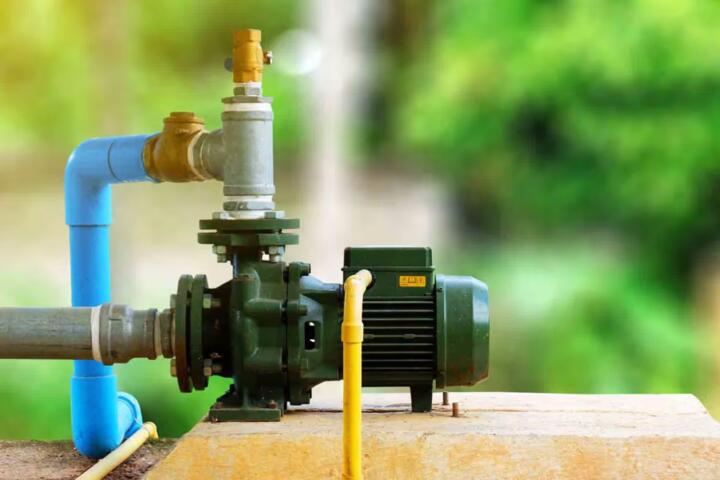
Always use a dedicated, food-grade pump for extraction. Reusing an old sump pump or a cheap drill pump can introduce oils and metallic shavings into your clean supply. Use a manual siphon pump or a high-quality 12V DC pump like those from SEAFLO, which are designed for potable water systems in RVs. Ensure the pump is flushed with a vinegar solution before and after use to prevent internal mold growth.
FAQ
Can I use pool chlorine to treat 500 gallons?
No. Pool chlorine often contains algaecides, clarifiers, and stabilizers (like cyanuric acid) that are not safe for human consumption. Use only NSF/ANSI 60 certified sodium hypochlorite or specialized water preservation concentrates.
How often should I test my stored water?
You should perform a visual inspection every 6 months for cloudiness or sediment. A digital pH test and a TDS (Total Dissolved Solids) test should be conducted annually. If the pH drops below 6.5, the water may be becoming acidic due to CO2 absorption, necessitating a refresh.
Is it safe to store water in a garage near gasoline?
Water is a universal solvent and can absorb vapors through the plastic walls of the container. Never store your water reserve in the same room as gasoline, kerosene, or paint thinners. The "permeation" effect can make the water taste like chemicals even if the seals are tight.
Do I need to boil 5-year-old stored water?
If you used a 5-year stabilizer and the tank remained sealed, it is technically safe. However, as an expert-level precaution, we always recommend a secondary filtration (0.1 micron) or a rolling boil for 1 minute to ensure 100% microbial safety before drinking.
What happens if the water freezes?
Water expands by approximately 9% when frozen. A 500-gallon tank that is 100% full will likely burst. If your storage area is subject to freezing, leave at least 10% "headspace" at the top of the tank to allow for expansion without compromising the structural integrity of the HDPE.
Author’s Insight
In my fifteen years of managing remote utility systems, I have found that the biggest hurdle is psychological, not technical. People underestimate how heavy 500 gallons is until they see their floor joists sagging. My best advice is to over-engineer your foundation and under-complicate your chemistry. Stick to one high-quality stabilizer, keep the light out, and buy a professional-grade RV hose for the initial fill. If you treat the water like a precious resource from day one, it will remain exactly that when the municipal taps eventually run dry.
Summary
Securing 500 gallons of water is a significant achievement in self-sufficiency, but its value depends entirely on the rigor of your maintenance. By selecting opaque HDPE containers, utilizing 5-year stabilized treatments, and ensuring structural support for the 4,000-pound load, you create a reliable life-support system. Focus on preventing UV exposure and chemical permeation to ensure your investment remains potable. Start by auditing your storage site's load-bearing capacity and sourcing an NSF-certified stabilizer today to lock in your family's safety for years to come.