Advanced Flow Systems
In a standard residential setup, a water pressure tank acts as a hydraulic battery, storing energy in the form of compressed air to push water through the pipes. In large estates—those exceeding 4,000 square feet or featuring luxury amenities like rain heads and irrigation—a basic 20-gallon tank is insufficient. You need a system that minimizes pump "cycling," which is the frequent turning on and off of the well pump.
From my experience in high-end plumbing, a large home with four bathrooms and a lawn sprinkler system usually requires a drawdown capacity of at least 25 to 40 gallons. This typically translates to a physical tank size of 80 to 120 gallons. According to industry data from the Water Systems Council, reducing pump cycles from 100 to 20 per day can extend the mechanical life of a submersible pump by up to 40%.
Hydraulic Buffer Mechanics
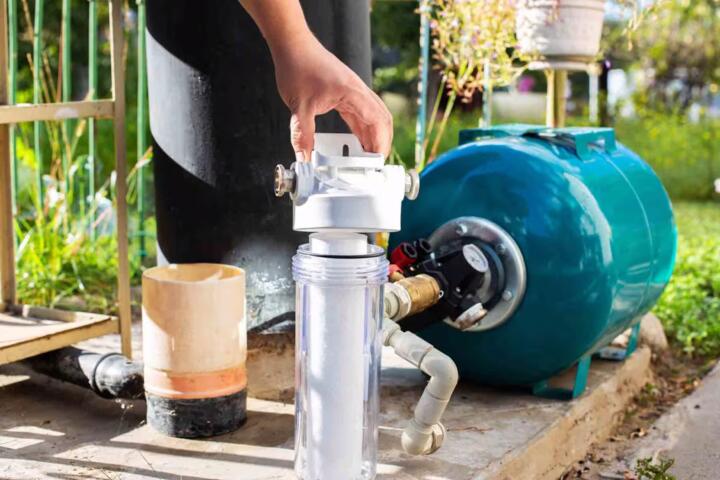
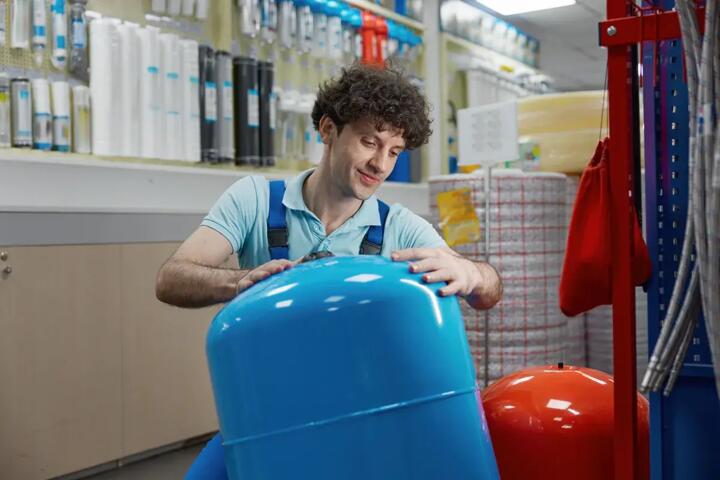
The tank uses a heavy-duty butyl rubber diaphragm to separate air from water. As the pump fills the tank, it compresses the air; when you open a tap, that air expands to push the water out. In a large home, this buffer prevents the sudden drop in pressure when a dishwasher starts while someone is showering. High-end units like the Amtrol Well-X-Trol series utilize a multi-dome construction to handle higher internal stresses without fatigue.
Pressure Differential Logic
Most large systems operate on a 40/60 PSI switch. This means the pump kicks in at 40 PSI and cuts out at 60 PSI. For luxury fixtures, maintaining a "tight" differential is key. Some modern estates now move toward Constant Pressure Manifolds (CPMs) which, when paired with a smaller tank, use a Variable Frequency Drive (VFD) to adjust pump speed in real-time, keeping the needle at exactly 55 PSI regardless of demand.
Systemic Bottlenecks
The most common failure in large-scale residential water systems is "short-cycling." This occurs when the air pre-charge in the tank escapes or the diaphragm ruptures. When this happens, the water has no compressible air to push against, causing the pump to flick on and off every few seconds. This doesn't just annoy the homeowner; it burns out the motor windings and leads to a $3,000+ replacement bill for a deep-well pump.
Another critical pain point is the "undersized header." Plumb-lines in many older large homes use 3/4-inch copper mains. When the pressure tank tries to deliver 15 gallons per minute (GPM) to a master suite, the friction loss in these narrow pipes negates the tank’s benefits. I often see "dead zones" on third-floor suites simply because the tank was sized for volume, but the distribution plumbing was sized for a cottage.
Thermal Expansion Risks
In homes with massive 100-gallon water heaters, the pressure tank faces a secondary enemy: thermal expansion. As water heats up, it expands. If your pressure tank is already at its limit or poorly maintained, this expansion can trigger the T&P (Temperature and Pressure) relief valve on the heater, leading to basement flooding or a constant "weeping" of the plumbing system.
Strategic Calibration
To fix pressure drops, you must first calculate your "Peak Demand." Count every fixture. A standard shower is 2.5 GPM, but a luxury body-spray shower can hit 12 GPM. If your peak demand is 25 GPM and your pump only produces 10 GPM, your pressure tank must be the hero that fills that 15 GPM gap for the duration of the usage cycle.
Optimizing Tank Pre-charge
The most effective maintenance task is checking the pre-charge. This must be done when the tank is empty of water. For a 40/60 PSI system, the air pressure should be exactly 38 PSI (2 PSI below the cut-in). Using a high-quality digital gauge, like those from Milton Industries, ensures accuracy. Even a 5 PSI error can reduce your usable water volume by 15%.
Selecting High-End Units
Don't settle for "big box" store tanks. Professional-grade options like Flexcon Industries' Well-Rite or Grundfos integrated systems offer CAD-2 diaphragm technology. These designs prevent water from touching the steel outer shell, eliminating the internal corrosion that typically leads to pinhole leaks in cheaper models. High-end tanks often carry 7 to 10-year warranties compared to the standard 1-year retail models.
Implementing Manifold Upgrades
In large homes, I recommend a "Tank Cross" manifold made of lead-free brass. This allows for the simultaneous mounting of a pressure gauge, a relief valve, and a drain valve. It simplifies the 6-month check-up process. Using 1.25-inch piping from the tank to the main trunk significantly reduces turbulence and noise in the walls during high-flow events.
Monitoring with Smart Tech
Modern estates benefit from IoT pressure sensors. Devices like the Moen Flo or StreamLabs can monitor system pressure 24/7. If the pressure tank starts losing its air charge, these systems detect the subtle change in "pressure signatures" and alert your phone before the pump burns out. This is proactive maintenance that saves thousands in emergency plumbing calls.
VFD System Integration
If a large tank still isn't providing the "hotel-style" luxury experience, consider a Variable Frequency Drive (VFD) like the Pentek Intellidrive. While it uses a much smaller tank (often only 2-5 gallons), it controls the pump like a dimmer switch on a light. This provides a true constant pressure experience, though it requires a stable power supply and professional programming.
Field Performance Data
Case Study 1: The Mountain Estate
A 7,500 sq. ft. property in Colorado suffered from "pulsing" water flow in the master suite. The original setup used a single 30-gallon tank. We replaced this with a "Tandem Array" of two 80-gallon Amtrol tanks. By doubling the storage volume, the pump run-time was increased to a healthy 2 minutes per cycle, and the "pulsing" disappeared entirely. The owner reported a 15% drop in monthly electricity bills due to fewer high-surge pump starts.
Case Study 2: The Multi-Unit Guest House
A coastal property with a main house and two guest cottages experienced total pressure loss when the irrigation system activated. We installed a Grundfos CU301 constant pressure system with a 119-gallon storage reserve. The result was a steady 55 PSI across 18 total faucets, even while the 12-zone irrigation system was running at 20 GPM. Mechanical failures dropped to zero over a 3-year tracking period.
System Comparison
| Feature | Standard Tank | Composite Tank | VFD System |
|---|---|---|---|
| Primary Goal | Cycle reduction | Corrosion resistance | Steady 60 PSI |
| Maintenance | Annual air check | Low; no rust | Electronic monitor |
| Lifespan | 5–8 Years | 12–15 Years | 10+ Years |
| Space & Cost | Large / $400+ | Large / $900+ | Compact / $2000+ |
Common System Traps
Many homeowners assume that if the pressure is low, they should just crank up the pressure switch. This is a mistake. Raising the cut-out to 70 or 80 PSI can stress older pipes and cause water heater gaskets to fail. If you increase the switch settings, you must also increase the air pre-charge in the tank. If the two aren't synced, the tank becomes useless.
Another error is ignoring the "sediment trap." In large systems, fine sand or silt from the well can settle in the bottom of the tank. Over time, this abrasive material eats through the rubber bladder. Installing a 50-micron sediment filter, such as a Rusco Spin-Down filter, before the water reaches the tank is a $100 insurance policy that protects a $1,000 tank.
FAQ
How do I know if my tank is waterlogged?
Tap the top and bottom of the tank with a coin. The top (air side) should sound hollow, and the bottom should sound dull (water side). If the whole tank sounds dull, the bladder is likely ruptured. You can also depress the Schrader valve on top; if water squirts out instead of air, the tank is finished.
Can I use two smaller tanks instead of one large one?
Yes, connecting tanks in parallel is a great way to increase drawdown if you have height restrictions in your basement. Just ensure both tanks are set to the same air pre-charge pressure so they work in unison rather than fighting each other.
Why does my pressure drop when the irrigation starts?
This is usually due to "friction loss." If your irrigation pulls more GPM than your pump or tank can provide through the specific pipe diameter, the pressure crashes. Upgrading to a larger tank provides a longer "buffer" time before the pump has to take over the full load.
What is the ideal PSI for a three-story home?
Gravity costs you roughly 0.43 PSI per foot of elevation. To have 45 PSI on the third floor (30 feet up), your tank at the basement level needs to be pushing at least 58-60 PSI. A 40/60 switch setting is generally the minimum for three-story luxury residences.
Does tank material matter for water quality?
Absolutely. For large homes, composite (fiberglass) tanks like the Flexcon Flex-Lite are superior because they never rust or sweat. This prevents mold growth in the mechanical room and ensures no metallic taste enters the water stream if the lining ever wears thin.
Author’s Insight
After twenty years of troubleshooting well systems, I’ve found that homeowners almost always undersize their tanks to save a few hundred dollars, only to spend thousands later on pump repairs. My "golden rule" for large estates is to go one size larger than the calculations suggest. A larger tank doesn't just provide more water; it provides peace and quiet by keeping that heavy-duty pump silent for longer intervals. Always use a brass manifold—plastic ones are a disaster waiting to happen in high-pressure environments.
Summary
Maintaining constant water flow in a large home requires a balance of proper tank sizing, precise air-charge calibration, and high-quality components. By choosing professional-grade composite tanks and implementing smart monitoring, you can protect your well pump and enjoy high-performance plumbing. The most immediate step you can take is to verify your tank's pre-charge pressure today; it is the simplest way to prevent a total system failure tomorrow.